

Brazil Brazil

Brazilian Green Coffee Beans

Today, about a third of the world’s coffee comes from Brazil, making it the largest producer globally. This level of production means Brazil has a significant influence on international coffee prices. With options ranging from wholesale sizes to smaller packages perfect for sampling or home roasters, we provide Brazilian coffee known for its smooth, chocolatey coffees with low acidity and wide versatility. To see how these compare with other origins, browse our full range of green coffee beans.

Regions
Minas Gerais · Espírito Santo
Varieties
Acaiá · Catuai · Mundo Novo
Harvest
May – Sep
Scale
No1 coffee producer. Accounts for 1/3 of global production. (USDA FAS)

In stock now

5 Brazilian coffees in stock · 12 recently sold out

Recently sold out

Still worth a read – most producers come back next harvest.

ORIGIN GUIDE

Buying and roasting Brazilian green coffee

Saskia Chapman Gibbs, Marketing & Sustainability, Green Coffee Collective

Why Brazilian coffee tastes the way it does

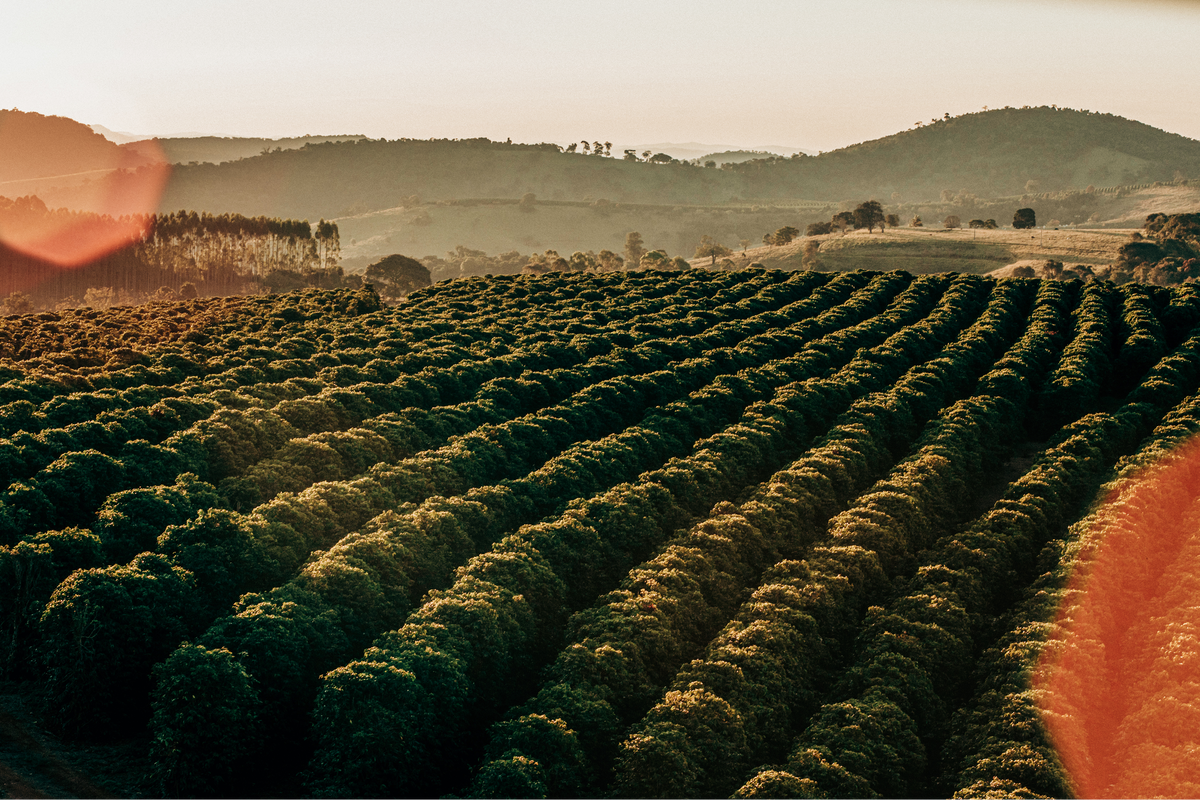
Much of Brazil’s coffee grows at moderate altitudes of around 700–1,200m, on wide, sunny plateaus rather than steep mountainsides. Lower altitude and warmer temperatures give beans that are less dense and lower in acidity than high-grown coffees. That’s the base of the classic Brazilian cup: nutty, chocolatey and round.

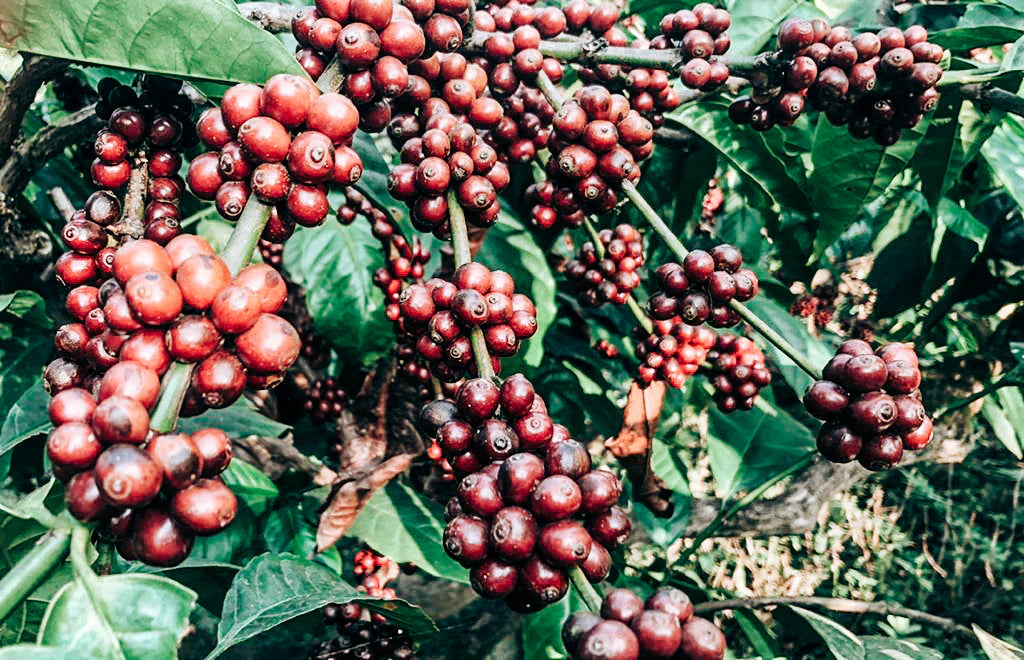
Processing builds the sweetness. Most Brazilian coffee is natural, dried in the sun inside the whole cherry, which gives it a heavier body and a deep, sugary sweetness. Brazil also popularised the pulped natural method, where the skin comes off but the sticky fruit stays on as the bean dries, for a cleaner cup that keeps much of that sweetness.

Climate keeps it consistent. Warm, stable weather and a reliable dry season give an even crop on red, mineral-rich soils like those of the Cerrado. The result is less about wild fruit and more about cocoa, caramel and nuts. That makes Brazil a dependable base for espresso and an easy coffee to roast.

Read: The Cold War coup that protected Brazil's coffee oligarchy

How Brazilian coffee is processed

How the cherry is handled after picking changes the cup more than almost anything else.

WashedCherry skin and mucilage removed before drying – clean, bright, origin-expressive cup.0 in stockWhat is it?
NaturalWhole cherries dried with fruit intact – produces heavy body and fruit-forward flavour.5 in stock →What is it?
ExperimentalCoffee fermented in sealed, oxygen-free vessels – producing intense, fruity profiles.0 in stockWhat is it?
DecafCaffeine removed from the green beans before roasting, keeping as much of the origin character as possible.0 in stock

The regions

Translation missing: en.origin.map.title VENEZUELAPERU →COLOMBIA →BOLIVIAARGENTINA Brasília Minas Gerais Espírito Santo Translation missing: en.origin.map.title VENEZUELAPERU →COLOMBIA →BOLIVIAARGENTINA Brasília Minas Gerais Espírito Santo
Minas Gerais800–1,200m
Around half of Brazil’s coffee comes from this one state. Family farms in Sul de Minas, big mechanised estates in the Cerrado, and a growing push towards high-scoring specialty lots.
Espírito Santo600–1,200m
Two coffee worlds in one state: Robusta on the warm lowlands, and specialty Arabica on steep, misty slopes in the Montanhas do Espírito Santo and Caparaó.

Minas Gerais rainfall: 2026 vs the 10-year average

2026 10-year average

Minas Gerais has had  17% more rain than its 10-year average so far this year (621 mm against 529 mm, January to October). August to October were 60% above normal.

Monthly rainfall in Minas Gerais, Brazil, 2026 compared with the 2016–2025 average
Month 2026 (mm) 10-year average (mm)
January 212 164
February 117 139
March 108 72
April 17 39
May 1 14
June 15 5
July 2 2
August 6 5
September 21 8
October 122 80
November not yet 142
December not yet 171

Why it matters: rain at flowering sets up the next crop, and dry weather at harvest helps naturals dry evenly. Big swings either way can mean a smaller or later harvest – we'll say so here as reports come in.

Source: NASA POWER (MERRA-2) for Minas Gerais (17.45901767°S, 44.6192978°W) · updated monthly · last updated 8 Nov 2026

Meet a producer: DBarbosa (the Barbosa Family)

DBarbosa (the Barbosa Family)

Cerrado Mineiro, Minas Gerais, Brazil ↗

DBarbosa is the Barbosa family's own export brand, run from Carmo do Paranaíba in Minas Gerais, Brazil. Coffee has passed down the family since Elias Barbosa, great-grandfather of today's head of the family, Danilo Barbosa, who now runs the farms with his sons Vitor Marcelo and Sergio Ricardo and the wider family. Their farms include Sucuri, where Caramelo is grown, and Fazenda Cachoeira, whose lot from Vitor Marcelo won Brazil's Cup of Excellence in 2021, the top scoring coffee in the country that year.

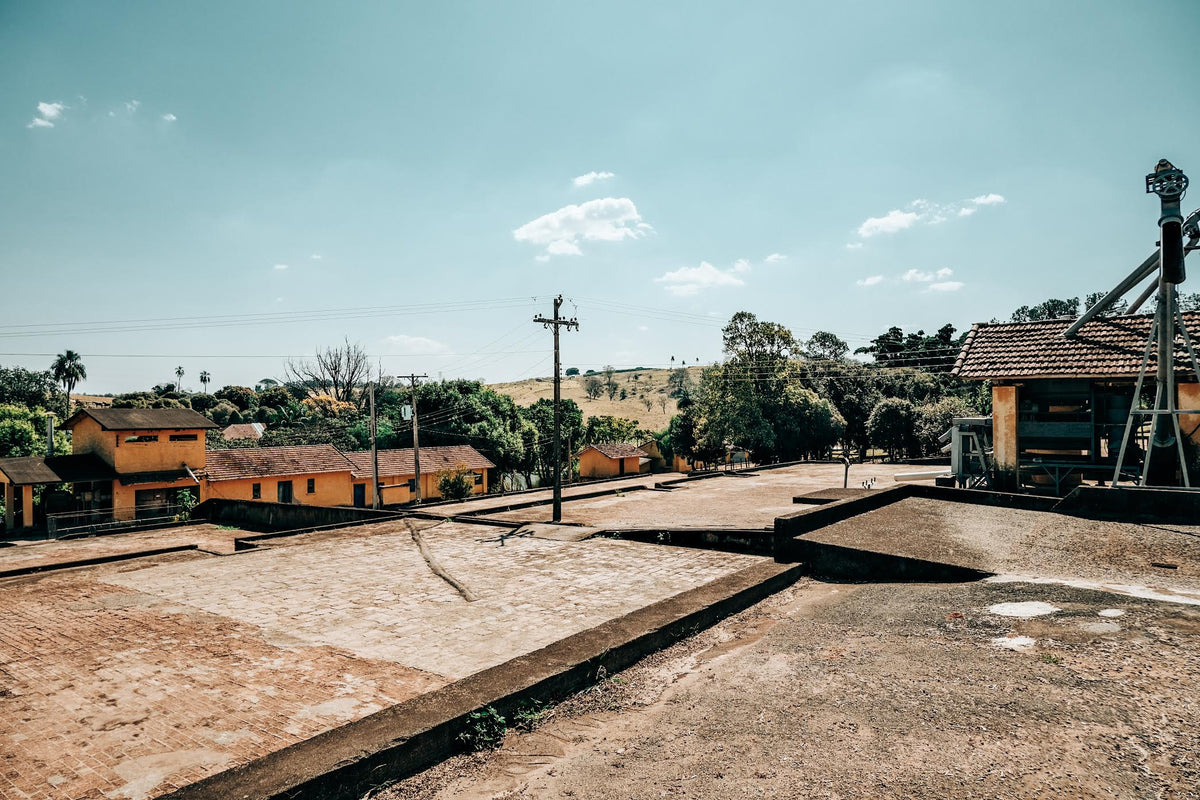
The family farms in Cerrado Mineiro, a high, largely flat plateau in western Minas Gerais and the first Brazilian coffee region to earn a protected designation of origin. Its clearly defined wet and dry seasons give a dry, sunny harvest, ideal for drying whole cherries for natural processed coffee.

From farm to our warehouse

Brazilian coffee reaches buyers through a few main routes. Larger estates, especially in Minas Gerais and São Paulo, often sell their lots directly to importers. Small and medium-sized farms usually pool their harvests through regional cooperatives, which handle dry milling, grading by screen size and cup quality, and export. Exporters and trading houses also buy from thousands of producers and sort their coffee into consistent lots.

We buy Brazilian coffee through Dbarbosa, Cargo and Mio, our Brazilian sourcing partners. Working through them lets us buy specific farm lots rather than anonymous blends, so we can usually tell you the farm, the variety and how it was processed.

Lots change from harvest to harvest. Brazil’s harvest runs from roughly May to September, and weather can shift a crop a lot from year to year: a frost or a dry spell can change both volumes and quality. We’d rather buy what’s cupping best that season than repeat a name for the sake of it. If you liked a past lot, join the arrivals list and we’ll tell you what’s closest when new crop lands.

Read: Industry Insight: How Brazil Moves the Price of Coffee

Brazilian lots we've sourced

Every lot we've brought in, with our team's cupping score where we have one. A good guide to what next season's will be like.

Past lots on record
23
Average cup score (15 scored)
84.2
Highest
89.5 Auro 72h Yeast Fermentation Acaiá Peaberry
Brazilian lots we've sourced
Lot Region Process Crop Score
Auro 72h Yeast Fermentation Acaiá PeaberryCaramel Shards, Yellow Tomato, Physalis Quarenta, Minas Gerais Extended Fermentation 23/24 89.5
S07– – Natural c. 23/24 86.0
DrunolaGranola, Japanese Plum, Chocolate Chip Monte Santo de Minas Natural 23/24 85.0
S13– – Natural c. 23/24 85.0
Pico Mirante– – Natural 2023 84.5
Pico MiranteSyrup Minas Gerais Natural 2024 84.5
Sitio ArabelaCaramel, Plum Divinolândia, São Paulo Natural 2024 84.5
NotadoNutty, Chocolatey Monte Santo de Minas Honey c. 23/24 84.0
S09– – Extended Fermentation c. 23/24 84.0
SO2– – Washed c. 22/23 84.0
Tanomo | Green Unroasted Coffee BeansDried Fruit, Nuttiness, Creaminess Monte Santo de Minas Natural c. 23/24 84.0
CO2– – Honey c. 22/23 83.0
Alici | Mundo NovoOrange, Vanilla, Honey Monte Santo de Minas Natural 22/23 82.5
Capeca Bossa - Fine CupChocolate, Nutty, Brown Sugar – Natural 24/25 82.0
CO6– – Natural c. 22/23 81.0
CO4– – Honey c. 22/23 N/A
Espírito Santo | CanephoraBrown Spices, Cocoa, Nutty Espírito Santo Natural c. 23/24 N/A
Fazenda Picada– – Natural c. 22/23 N/A
Regional Brazilian– – Natural c. 22/23 N/A
S02 | Washed– – Washed c. 23/24 N/A
S06 | Semi-Carbonic Maceration– – Carbonic Maceration c. 23/24 N/A
S17 | Peaberry Semi-Carbonic Maceration– – Carbonic Maceration c. 23/24 N/A
S21 | Peaberry Natural– – Natural c. 23/24 N/A

When to buy Brazilian green coffee

Fresh-crop Brazilian lots arrive months after the harvest ends. Buy on arrival for the brightest cup.

Buying Brazilian coffee in volume

From a first sample bag to a container, without the import paperwork.

0.5 – 5KG Sample and small batch Open to everyone. Most lots offer a sample size so you can cup before committing.Shop in-stock lots →
10 – 20KG Wholesale account Approved roasters see 10kg and 20kg sizes and trade pricing when signed in.Apply for wholesale →
FULL SACKS & CONTAINERS Through our import partners Sacks, pallets and full containers from the importers we buy Brazilian coffee from. MioCargoBossa

Roasting Brazilian coffee

Brazilian coffees are often lower in density than high-grown beans, especially naturals and pulped naturals. That makes them prone to scorching or browning unevenly if you hit them with too much heat early on. Start with a lower charge and a gentle flame, then ease the roast through drying and browning rather than piling on energy. Just don’t let it drag so long that the cup turns flat and baked. A medium roast brings out the classic chocolate, nut and caramel sweetness. Take it a little darker for espresso, or lighter for brighter, higher-grown specialty lots.

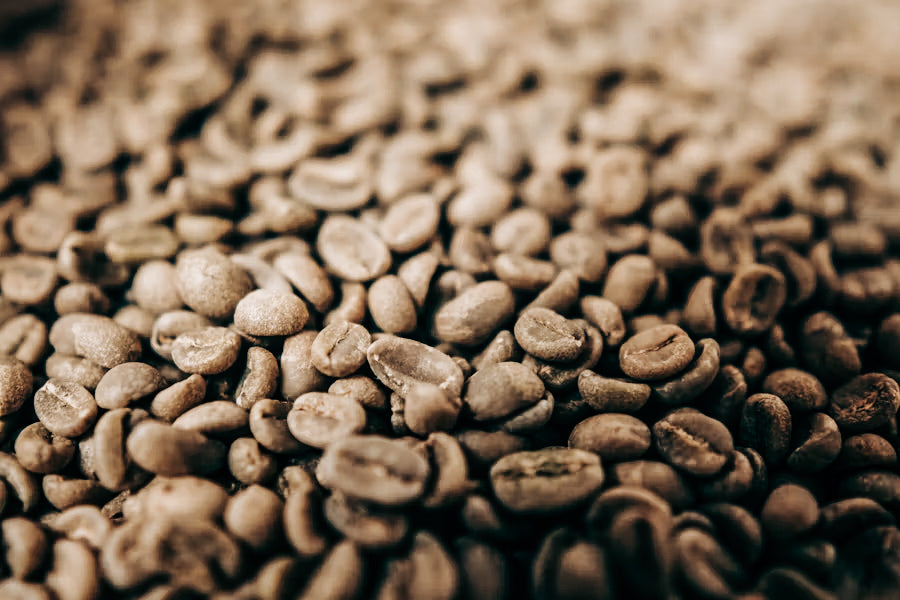
Never roasted coffee before? These are raw, unroasted beans – they need roasting before you can brew them. It's easier than it sounds.

Brazilian green coffee FAQs

What does Brazilian coffee taste like?

Classic Brazilian coffee is sweet, low in acidity and full-bodied, with nuts, milk chocolate and caramel. Higher-grown specialty lots can be brighter, with citrus, red fruit and florals.

What do NY 2/3, 17/18 and Fine Cup mean?

They’re Brazilian grading terms. “NY 2/3” comes from the New York grading system and measures physical defects, such as broken or unripe beans, in a 300g sample. The scale runs from NY 2, the cleanest, down to NY 8. NY 2/3 means very few defects. “17/18” is the bean size (screen size), and “Fine Cup” or “Strictly Soft” describes cup quality.

When is the best time to buy Brazilian green coffee?

Brazil’s harvest runs from roughly May to September, and new crop usually reaches us later in the year.

Is Brazilian coffee good for beginners?

Yes. Its familiar flavours and forgiving profile make it a great first origin to roast. A medium roast reliably brings out chocolate and nut notes, so it’s easy to see how changes to your roast affect the cup.

How do you roast Brazilian green coffee beans?

Brazilian beans are often lower in density, especially naturals, so they can scorch if hit with too much heat early on. Start with a lower charge, ease through drying and browning, and aim for a medium roast for classic chocolate and nut sweetness.