Rwanda Rwanda

Rwandan Green Coffee Beans

What sets Rwandan coffee apart is the nation's commitment to quality over quantity. Rather than focusing on high-volume commercial production, the government has invested heavily in the development of specialty coffee, enabling the country to position itself in the global speciality coffee market. 95% of coffee grown in Rwanda is bourbon, but it is prized for the renowned red bourbon varietal. For lots from every other origin, see our complete green coffee list.

Regions
Mbare · Nyamasheke · Huye
Varieties
Red Bourbon
Scale
Accounts for 0.2% of global coffee production. (USDA FAS)

In stock now

1 Rwandan coffee in stock · 5 recently sold out

Recently sold out

Still worth a read – most producers come back next harvest.

ORIGIN GUIDE

Buying and roasting Rwandan green coffee

Saskia Chapman Gibbs, Marketing & Sustainability, Green Coffee Collective

Why Rwandan coffee tastes the way it does

Rwandan coffees are usually bright, sweet and clean. Fruit tends to lead: red berries and red currant, stone fruit like peach, and citrus. Underneath there’s brown sugar, caramel or honey sweetness, and some lots have floral or black-tea notes.

Acidity is usually lively, in line with other East African coffees. Body ranges from light and tea-like to silky in sweeter lots.

Most Rwandan coffee is washed, which brings out clarity, citrus and florals. Naturals and other experimental lots tend to be heavier, jammier and sweeter.

Read: How genocide broke Rwanda’s backbone crop

How Rwandan coffee is processed

How the cherry is handled after picking changes the cup more than almost anything else.

WashedCherry skin and mucilage removed before drying – clean, bright, origin-expressive cup.1 in stock →What is it?
ExperimentalCoffee fermented in sealed, oxygen-free vessels – producing intense, fruity profiles.0 in stockWhat is it?
NaturalWhole cherries dried with fruit intact – produces heavy body and fruit-forward flavour.0 in stockWhat is it?

The regions

Translation missing: en.origin.map.title UGANDA →TANZANIA →DR CONGOBURUNDI → Kigali Mbare Nyamasheke Huye Translation missing: en.origin.map.title UGANDA →TANZANIA →DR CONGOBURUNDI → Kigali Mbare Nyamasheke Huye
Mbare1,600–2,200m
A newer specialty area in Rwanda’s Southern Province. Rwamatamu’s Mbare station opened in 2023, and within two years a washed Mbare lot placed second at Best of Rwanda.
Nyamasheke1,500–2,200m
Lake Kivu’s eastern shore, where Rwamatamu works closely with local smallholders and runs a Women’s Cooperative growing coffee on its own land, with seedlings and training.
Huye1,600–2,100m
Where Rwanda’s specialty coffee story began. In the early 2000s, farmers around Maraba in Huye opened one of the country’s first specialty washing stations, near the edge of Nyungwe Forest.

Meet a producer: Rwamatamu

Rwamatamu

Western-Nyamasheke, Rwanda ↗ Farming since 2015

Rwamatamu Coffee Ltd. is a family-owned business operated by Mukantwaza Laetitia and Rutaganda Gaston, who bring over 13 years of experience in the coffee sector. Founded in 2015, Rwamatamu Coffee Ltd. aims to achieve financial success while combating poverty in rural communities through sustainable coffee harvesting.

Rwamatamu boasts a 20-hectare coffee plantation, producing its own cherries and sourcing additional cherries from affiliated cooperatives, local producers, and smallholder farmers. Each batch is meticulously collected, processed, sun-dried, sorted, bagged, and ultimately exported as a premium product.

Nestled in the picturesque rolling hills of the Nyamasheke District in Rwanda's Western Province, our farm and washing station overlook the stunning Lake Kivu. This region offers a tropical highland climate with temperatures ranging from 14°C to 24°C and regular rainfall, ideal for growing Arabica coffee. The fertile volcanic soil at altitudes of 1600 to 2000 meters produces dense, hard beans with superior flavour.

Our coffee is fully washed with spring water, sun-dried, and handpicked to ensure the highest standards. We are currently in the process of obtaining organic and fair-trade certifications, reinforcing our commitment to quality and sustainability.

At Rwamatamu, we prioritise having a positive social and economic impact on our farming communities, especially focusing on empowering women. We collaborate closely with local cooperatives, and 80% of our workforce comprises women. Our mission is to foster healthy relationships with the community by committing to regular bean purchases, investing in employee growth, and maintaining high-quality standards each year.

From farm to our warehouse

Most Rwandan coffee is grown by smallholder farmers on small hillside plots. When the cherries are ripe, farmers deliver them to a nearby washing station, where they’re sorted, processed and dried. Washing stations often keep cherries from particular farmer groups separate, so a single lot can sometimes be traced back to a small number of named farmers. Once the coffee is dried, it’s milled, graded and bagged for export.

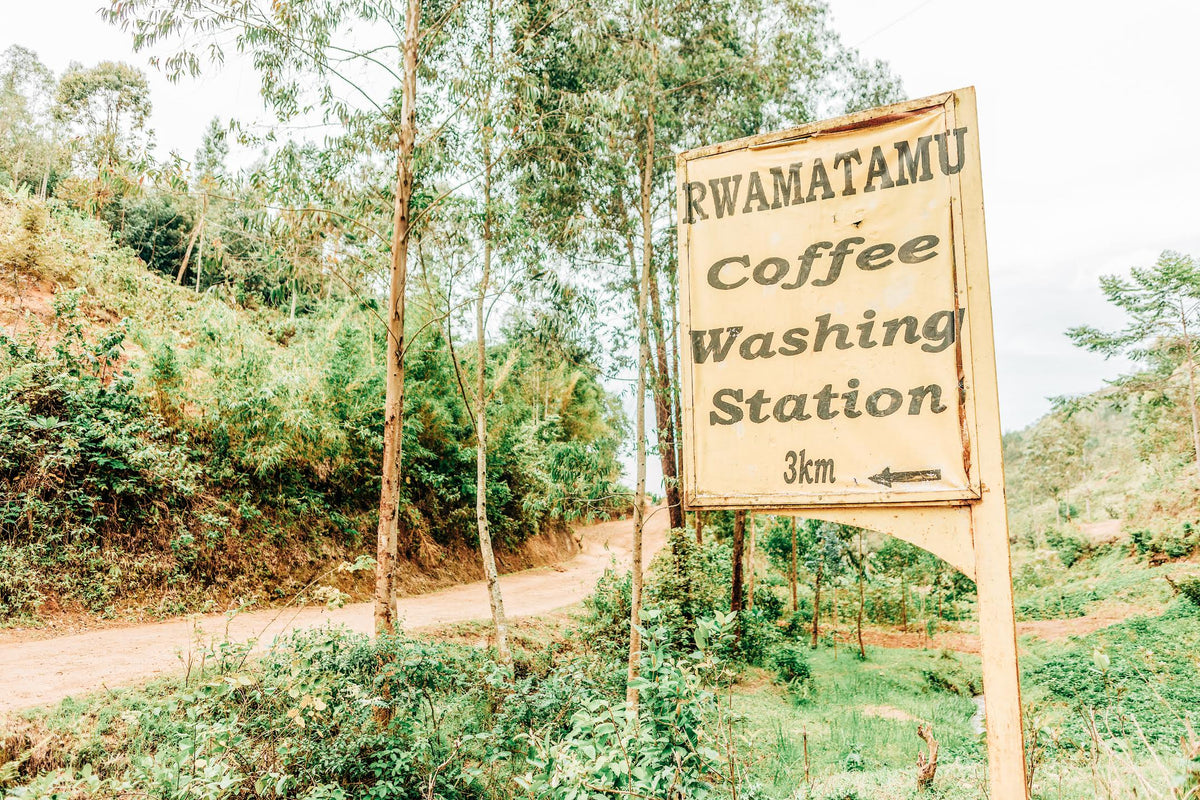
We buy our Rwandan coffees through Omwani, our sourcing partner for East Africa. Most of them come from Rwamatamu Coffee in Nyamasheke District, on the shores of Lake Kivu. Rwamatamu was founded in 2015 by Rutaganda Gaston and Mukantwaza Laetitia, and it now runs two washing stations: the original at Nyamasheke and a newer one at Mbare. Omwani first bought from Rwamatamu in 2022, and the partnership has grown every year since.

Rwanda’s main harvest runs from roughly January to March, and new-crop coffees reach us some months later. Each lot is a snapshot of one harvest from one group of farmers at one washing station, so weather, the size of the crop and processing choices all change what ends up in the cup. Most Rwandan coffee is washed, but stations like Rwamatamu’s Mbare also try out naturals and other methods, so the range we offer can change from season to season. Once a lot sells out, that exact coffee is gone. The next harvest brings something new.

Read: Industry Insight: How the end of zoning changed Rwanda's coffee trade

Rwandan lots we've sourced

Every lot we've brought in, with our team's cupping score where we have one. A good guide to what next season's will be like.

Past lots on record
10
Average cup score (10 scored)
86.2
Highest
87.25 Liza Anaerobic
Rwandan lots we've sourced
Lot Region Process Crop Score
Liza Anaerobic– – Anaerobic c. 22/23 87.25
Liza Carbonic Maceration– – Carbonic Maceration c. 22/23 87.25
Musaza Lot 11Peach, Strawberry, Orange Western Nyamasheke Natural c. 24/25 87.0
Rwamatamu NaturalPeach, Strawberry, Orange Western Nyamasheke Natural 23/24 87.0
Rwamatamu PeaberryRed Currant, Cranberry, Caramel Western Nyamasheke Washed c. 22/23 86.75
Kunywa AnaerobicGrapefruit, Tropical Fruit, Bittersweet Chocolate Western Nyamashake Anaerobic 23/24 86.0
Rwamatamu Centrally ProcessedMilk Chocolate, Nougat, Maple Syrup Western Nyamasheke Washed 2023 86.0
Mbare Lot 2Black Tea, Brown Sugar, Candied Citrus Mbare Washed 24/25 85.25
Musaza Lot 1Blood Orange, Black Tea, Dark Chocolate Western Nyamasheke Washed 2024 85.25
Rwamatamu Community– – Washed c. 22/23 84.0

Buying Rwandan coffee in volume

From a first sample bag to a container, without the import paperwork.

0.5 – 5KG Sample and small batch Open to everyone. Most lots offer a sample size so you can cup before committing.Shop in-stock lots →
10 – 20KG Wholesale account Approved roasters see 10kg and 20kg sizes and trade pricing when signed in.Apply for wholesale →
FULL SACKS & CONTAINERS Through our import partners Sacks, pallets and full containers from the importers we buy Rwandan coffee from. Omwani

Roasting Rwandan coffee

Rwandan coffees are usually high-grown Red Bourbon, with dense, average-sized beans that take heat well. Give them solid heat early so it gets right into the bean, then ease off as you approach first crack, which is usually clear and lively, so you don’t rush through and flatten the fruit and florals. Light to medium roasts bring out red fruit, citrus and tea-like clarity. Stretching development a little builds more sweetness and body.

Never roasted coffee before? These are raw, unroasted beans – they need roasting before you can brew them. It's easier than it sounds.

Rwandan green coffee FAQs

What does Rwandan coffee taste like?

Usually bright, sweet and clean. Expect red berries, stone fruit and citrus, with brown sugar, caramel or honey sweetness and sometimes floral or black-tea notes.

What variety is grown in Rwanda?

Mostly Red Bourbon. The vast majority of Rwanda’s coffee trees are this variety, a classic Arabica known for its sweetness and cup quality at high altitude.

Is Rwandan coffee washed or natural?

Most is washed, which gives the clean, bright profile Rwanda is known for. Naturals are quite unusual, but some washing stations, including Rwamatamu’s Mbare station, do produce them. These tend to be heavier, jammier and sweeter.

How should I roast Rwandan coffee?

Light to medium suits most lots and keeps the fruit and florals clear. Take it a little further for more caramel, chocolate and body.

What is “potato defect”?

It’s a raw-potato taste that occasionally turns up in coffees from Rwanda and neighbouring Burundi. It’s linked to insect damage on the cherry and affects individual beans rather than whole lots. You can’t see it in green coffee, so it usually shows up when you grind or brew. If you notice it, throw away that dose and move on. The rest of the bag will normally be fine.