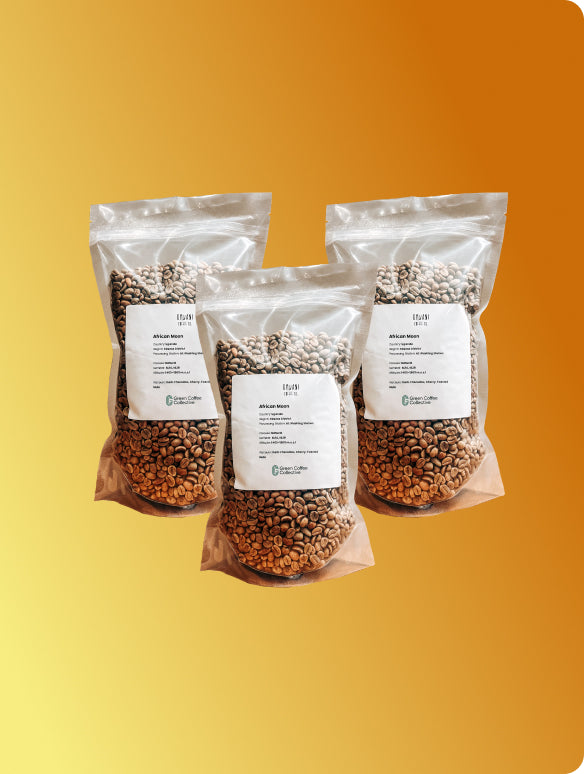
Sourced by Omwani. Fulfilled by Green Coffee Collective.
Buy high-quality green coffee in small volumes, with fast delivery.
-
African Moon
Cupping Score83.75Processing MethodVarietalSL 14, SL 28Main Flavour NotesDark Chocolate | Brown Sugar | Pecan | Cashew | PlumIn stock- 12 -
Kenya Orange CoFerment
Cupping Score86.0Processing Method, Fruit co-fermentationVarietalBatian, Ruiru 11Main Flavour NotesCaramel | Orange | PecanOut of stock -
Priory Farm AB
Cupping Score86.0Processing MethodVarietalRuiru 11, BatianMain Flavour NotesDry Fruit | Citrus | MolassesOut of stock -
Priory Farm AA
Cupping Score85.75Processing MethodVarietalRuiru 11, BatianMain Flavour NotesRaisins | Berry | ColaOut of stock -
Kericho County AA - Kenyan Decaf
Cupping Score85.25Processing MethodVarietalBatian, Ruiru 11, SL 28, SL 34Main Flavour NotesBrown Sugar | Malt | HoneyOut of stock -
Mitiku Yabato Natural
Cupping Score87.75Processing MethodVarietal74158, 74110, Local Land RacesMain Flavour NotesBlueberry | Creamy | UmamiOut of stock -
Bekele Balaycho Natural
Cupping Score87.75Processing MethodVarietalLandraceMain Flavour NotesBlackberry | Brown SugarOut of stock -
Priory Farm C
Cupping Score86.5Processing MethodVarietalRuiru 11, BatianMain Flavour NotesDates | Cola | GrapefruitOut of stock -
North Rift Natural
Cupping Score87.75Processing MethodVarietalBatian, Ruiru 11, SL 28, SL 34Main Flavour NotesRosehip | Blackberry | SweetOut of stock -
Midnight Flyer
Cupping Score86.5Processing MethodVarietalSL 14, SL 28Main Flavour NotesBlackcurrant | Candied Citrus | Juicy | SweetOut of stock -
Niguse Jilo Natural
Cupping Score88.75Processing MethodVarietalKurumeMain Flavour NotesBlackberry | Hibiscus | FloralOut of stock -
Ngila Estate Washed Geisha
Cupping Score87.0Processing MethodVarietalGeishaMain Flavour NotesRaspberry | Thyme | FloralOut of stock -
Musaza Lot 1
Cupping Score85.25Processing MethodVarietalRed BourbonMain Flavour NotesAlmond | Cedar | Cola | Raisin | CitrusOut of stock -
Equatoria Coffee Excelsa Anaerobic
Cupping Score82.25Processing Method, Anaerobic (whole cherry)VarietalCoffea Liberica var. DewevreiMain Flavour NotesChamomile | Green Apple | Honey | PecanOut of stock -
Washed Starmaya AA
Cupping Score83.0Processing MethodVarietalStarmayaMain Flavour NotesBrown Sugar | Cocoa Powder | Walnut | CitrusOut of stock -
Starmaya PB (Fully Washed)
Cupping Score83.75Processing MethodVarietalStarmayaMain Flavour NotesDark Chocolate | Dark Berries | BramblesOut of stock -
Agri Evolve Extended Fermentation
Cupping Score86.75Processing Method, Anaerobic (whole cherry), Extended fermentationVarietalSL 14, SL 28Main Flavour NotesBlackberry | Juicy | Violet | FunkyOut of stock -
Natural Marsellesa AB
Cupping Score84.5Processing MethodVarietalMarsellesaMain Flavour NotesMolasses | Cola | Bold | Mellow AcidityOut of stock -
Natural Marsellesa C
Cupping Score84.5Processing MethodVarietalMarsellesaMain Flavour NotesCacao Nibs | Honey | Dry FruitOut of stock -
Equatoria Coffee Natural Robusta
Cupping Score80.25Processing MethodVarietalRobustaMain Flavour NotesCocoa | Leather | WalnutOut of stock -
Niguse Nare Anaerobic Fermentation
Cupping Score86.25Processing Method, Anaerobic (whole cherry)Varietal74158Main Flavour NotesBlueberry | Peach | Floral | LimeOut of stock -
Tadessa Yonka Anaerobic Fermentation
Cupping Score86.5Processing Method, Anaerobic (whole cherry), Extended fermentationVarietal74158Main Flavour NotesCream | Mango | StrawberryOut of stock -
Ruronge Hill Lot 62
Cupping Score85.0Processing MethodVarietalRed BourbonMain Flavour NotesCaramel | Cola | Green AppleOut of stock -
Kirunga Lot 14
Cupping Score87.5Processing MethodVarietalRed BourbonMain Flavour NotesFruity | Clean | Juicy | CreamyOut of stock






























-
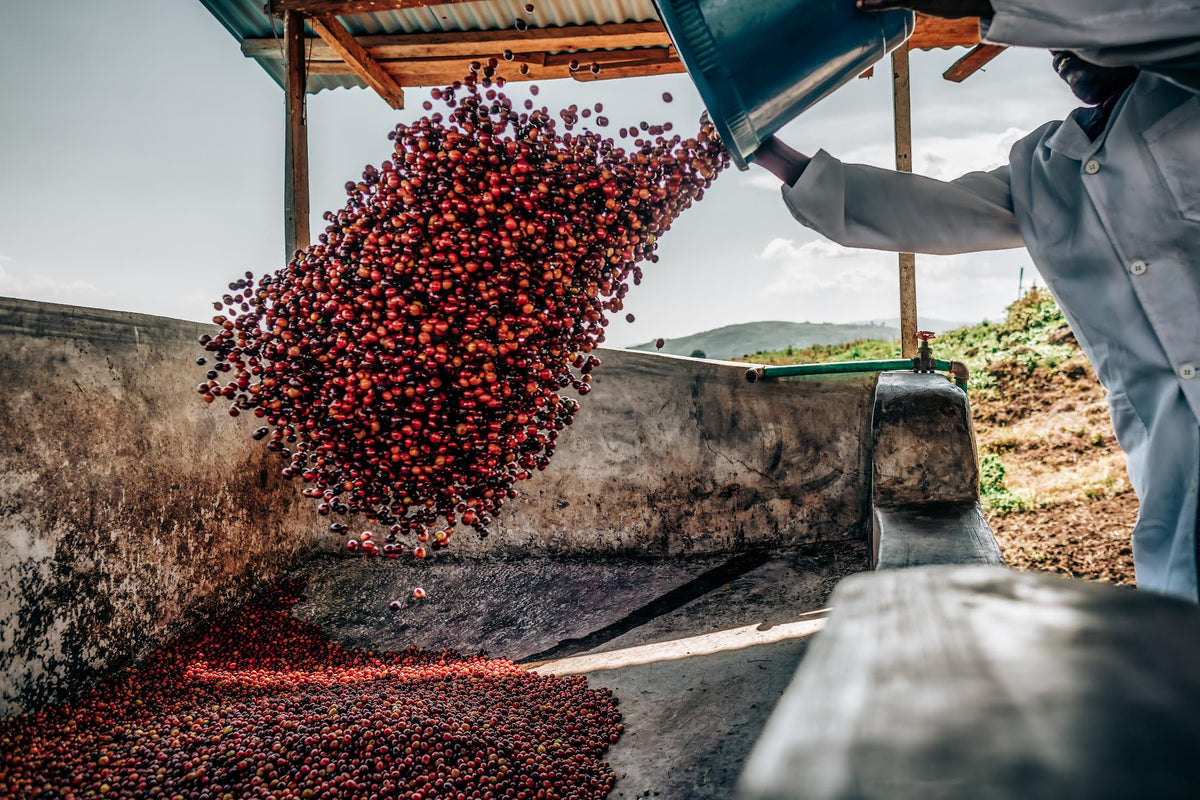
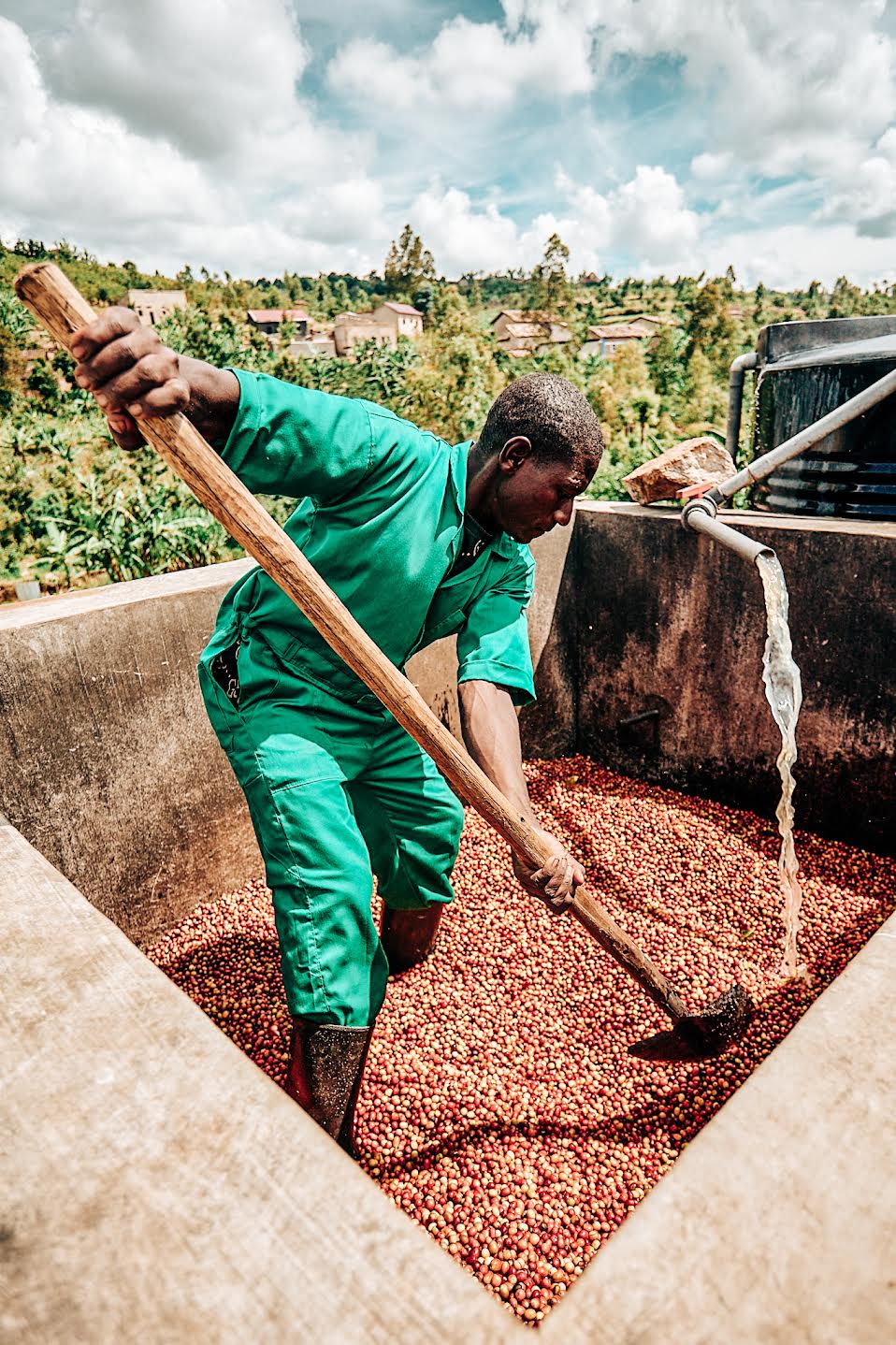
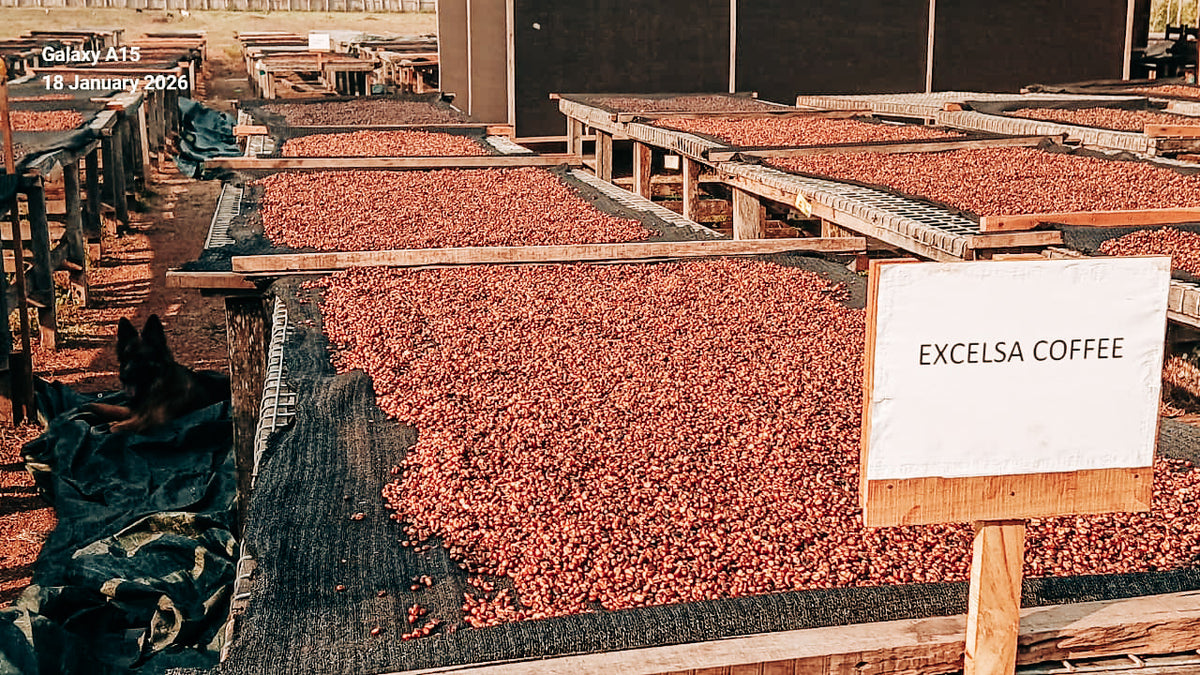
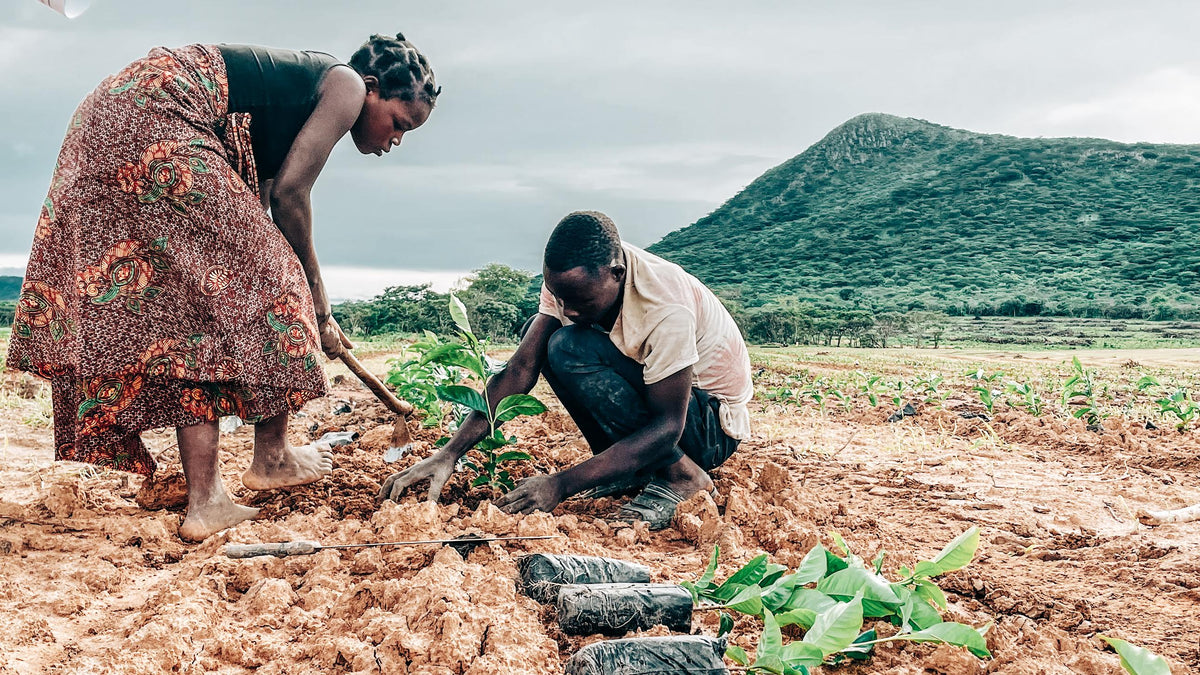
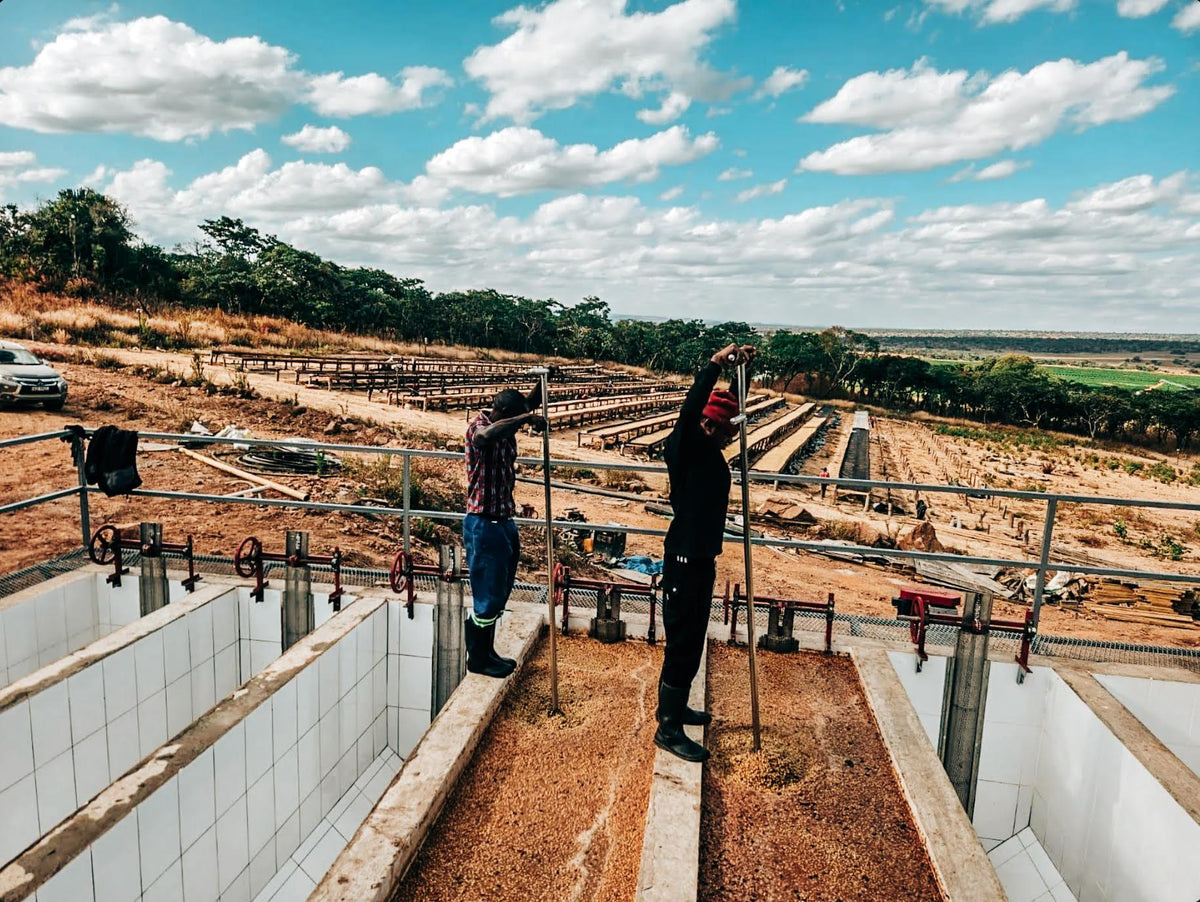
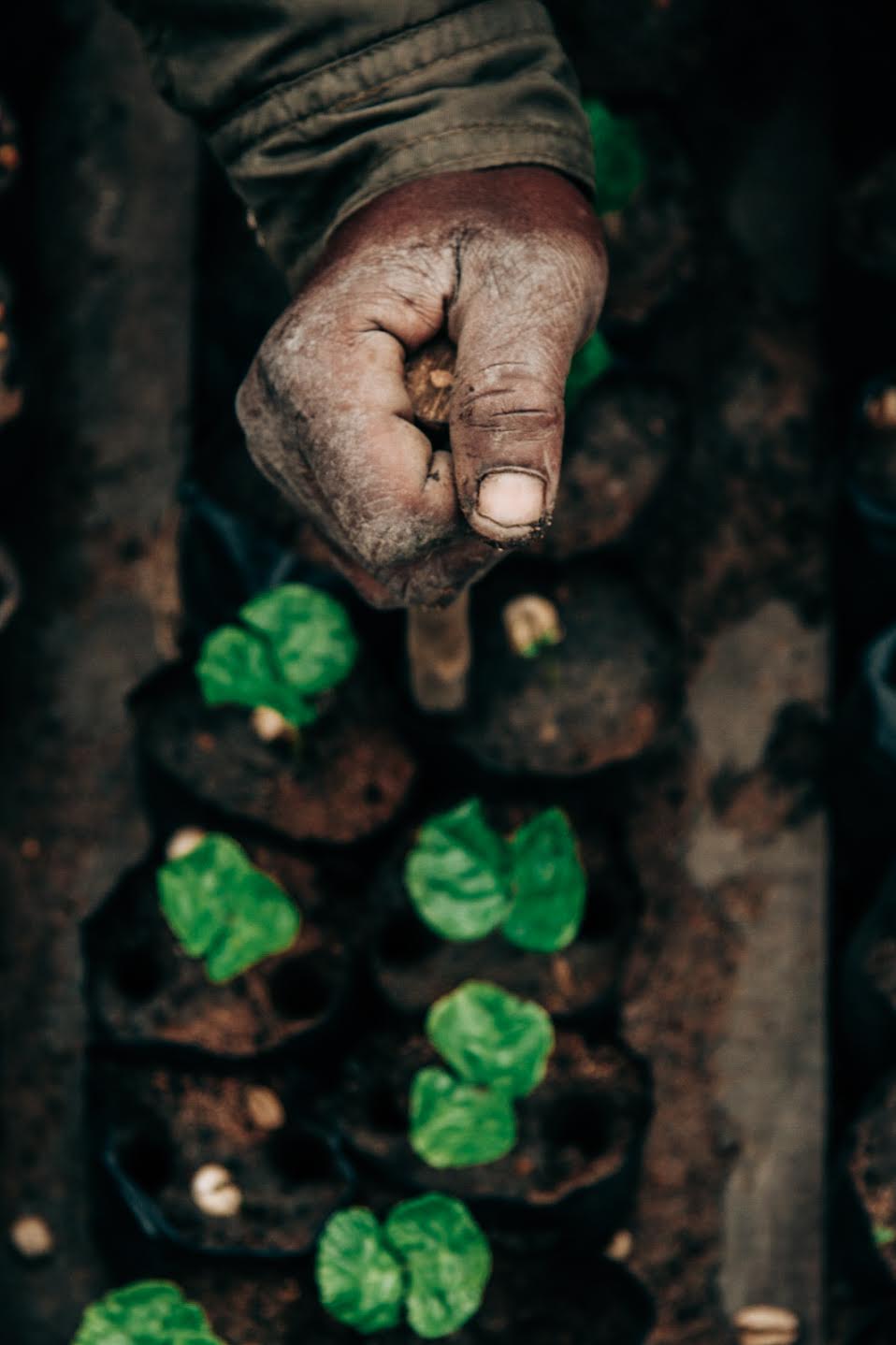
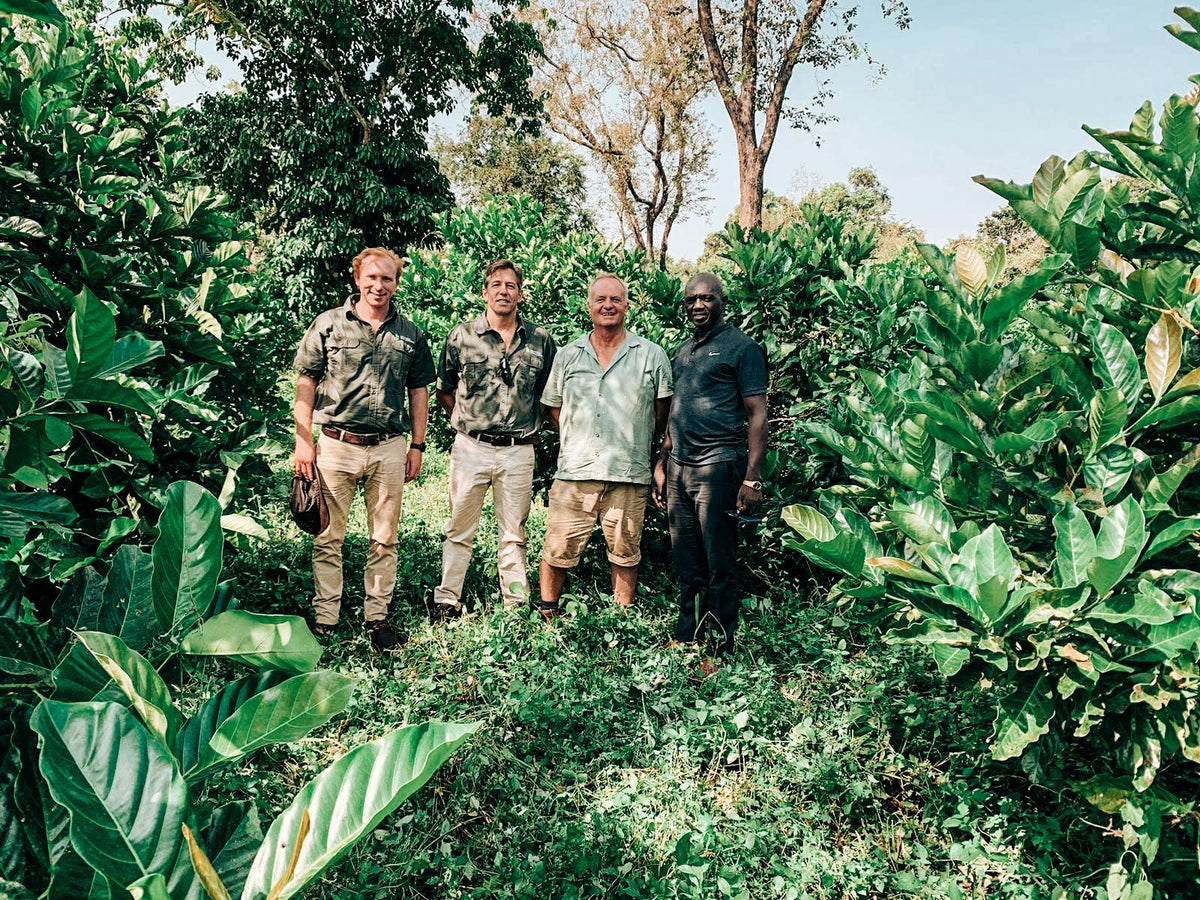
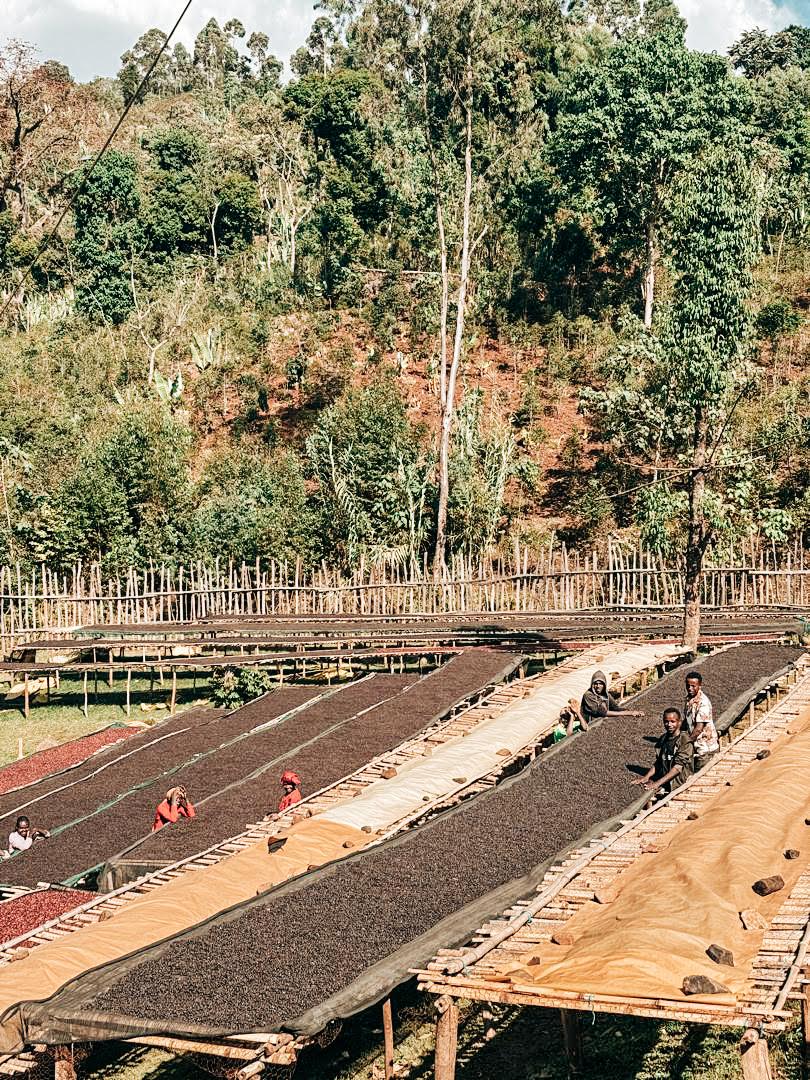
About Omwani


-
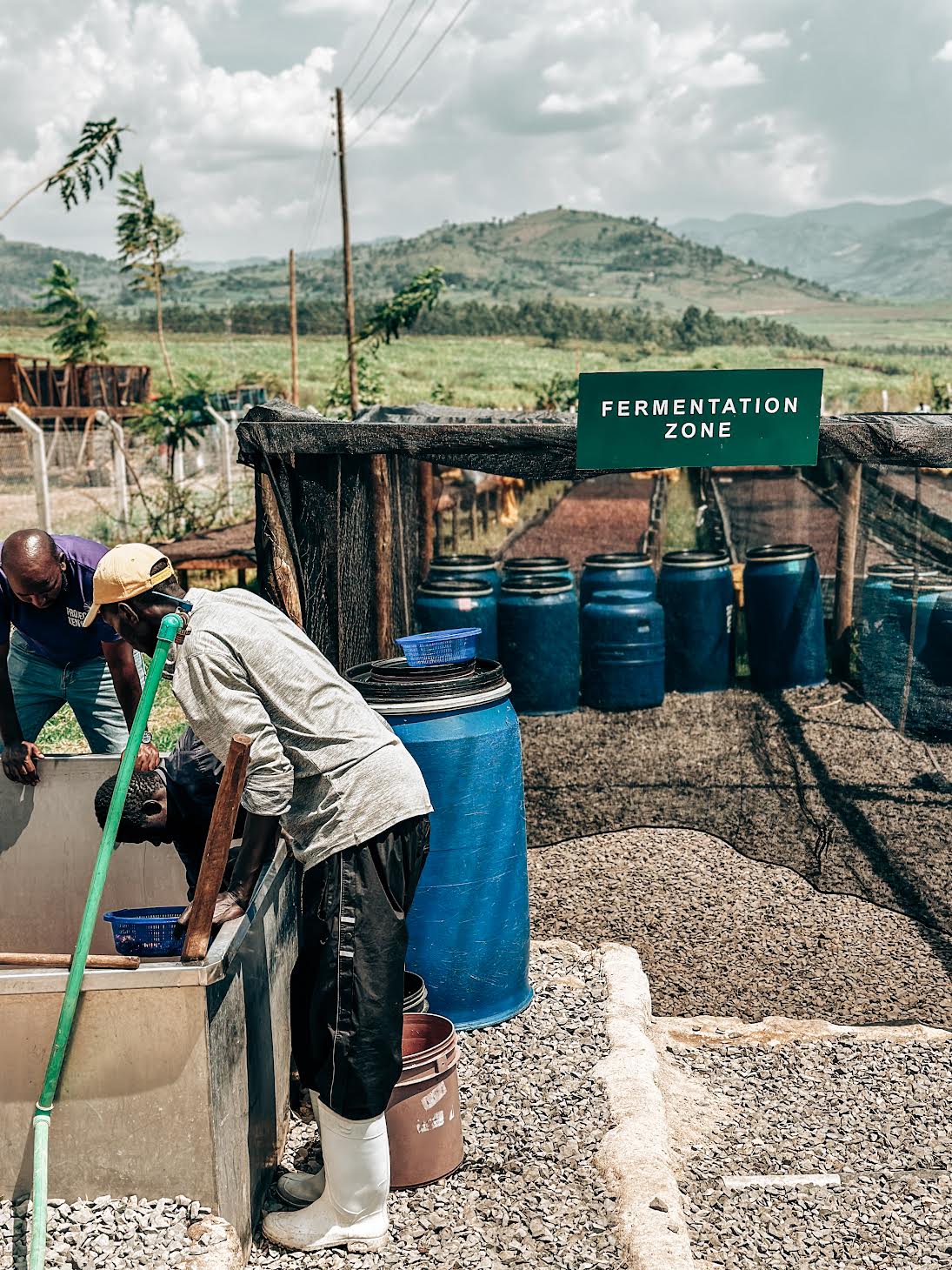
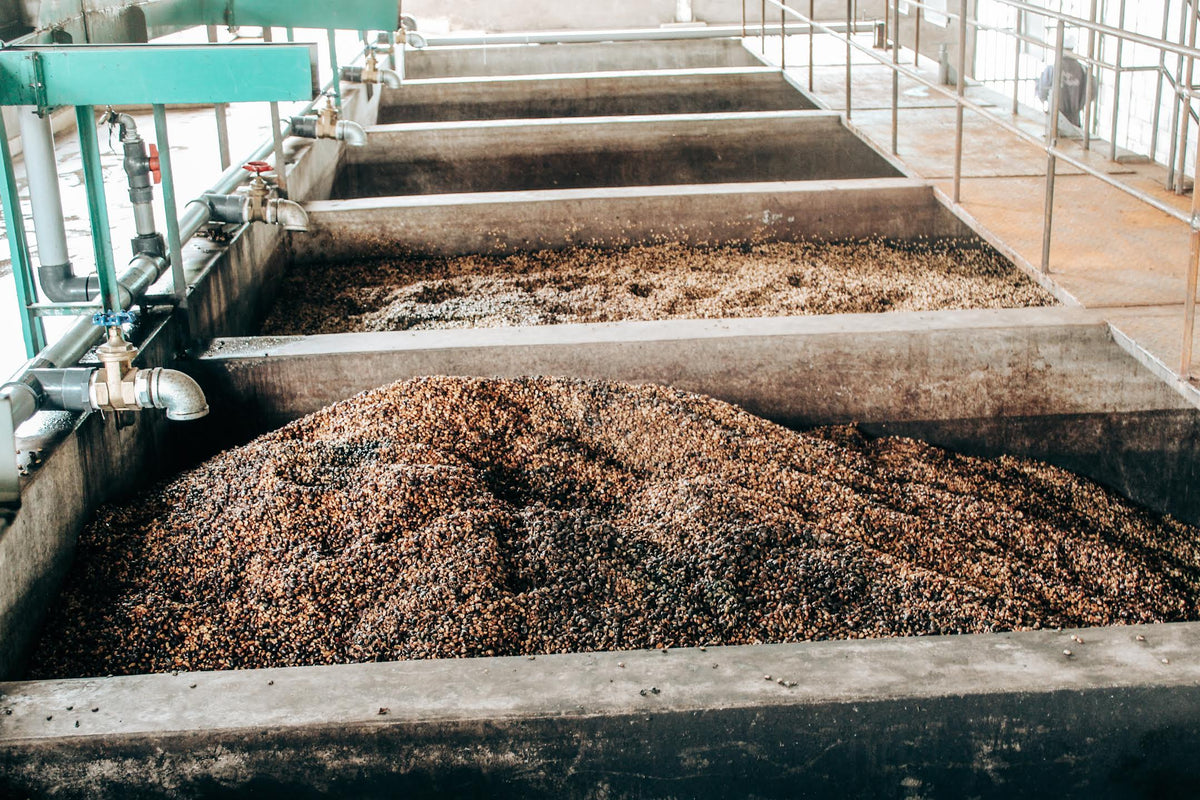
Transparent by Design
-
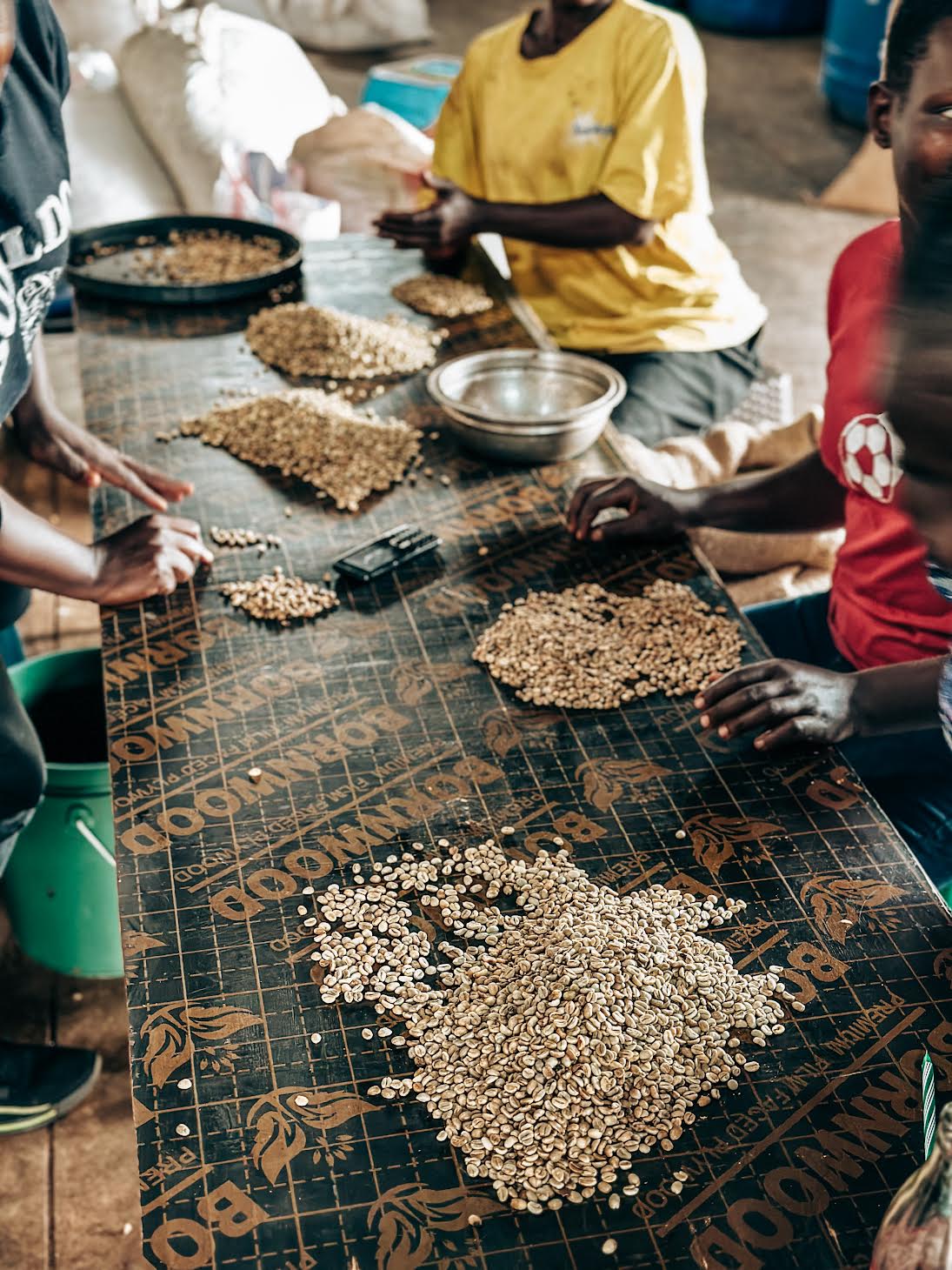
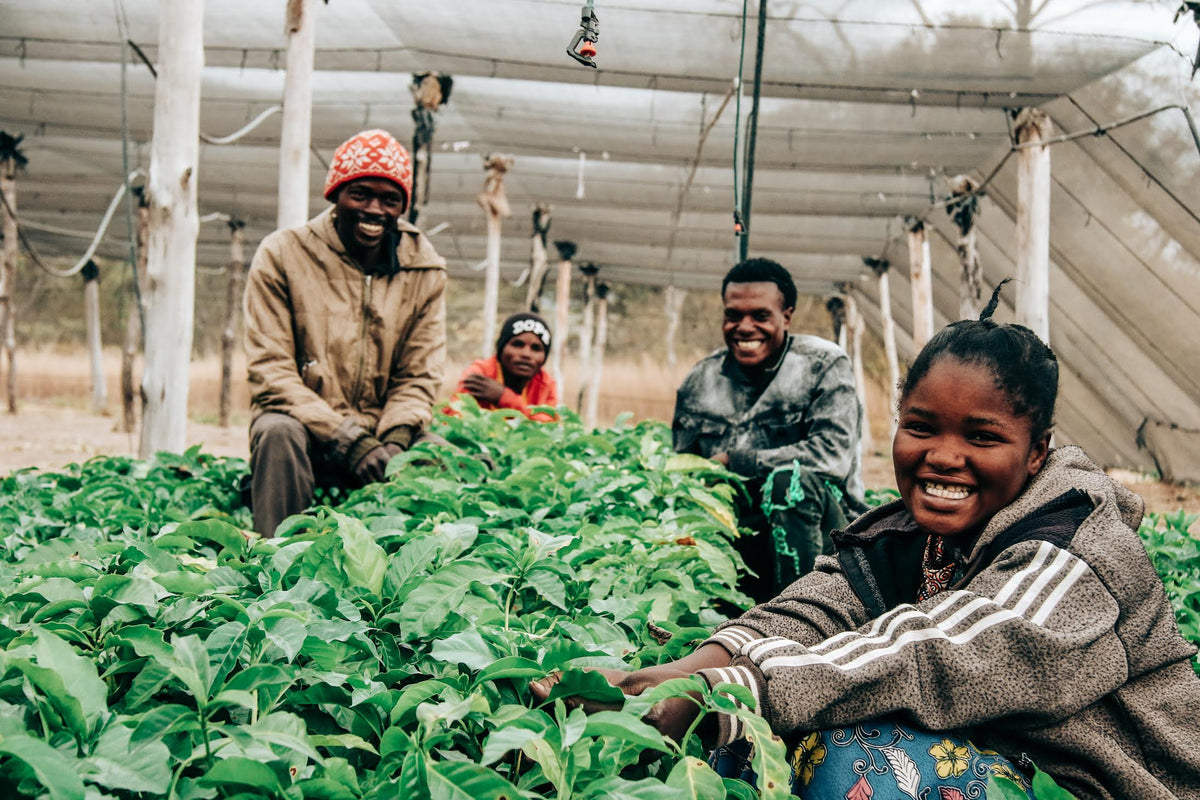
Staying Through the Bad Years
-
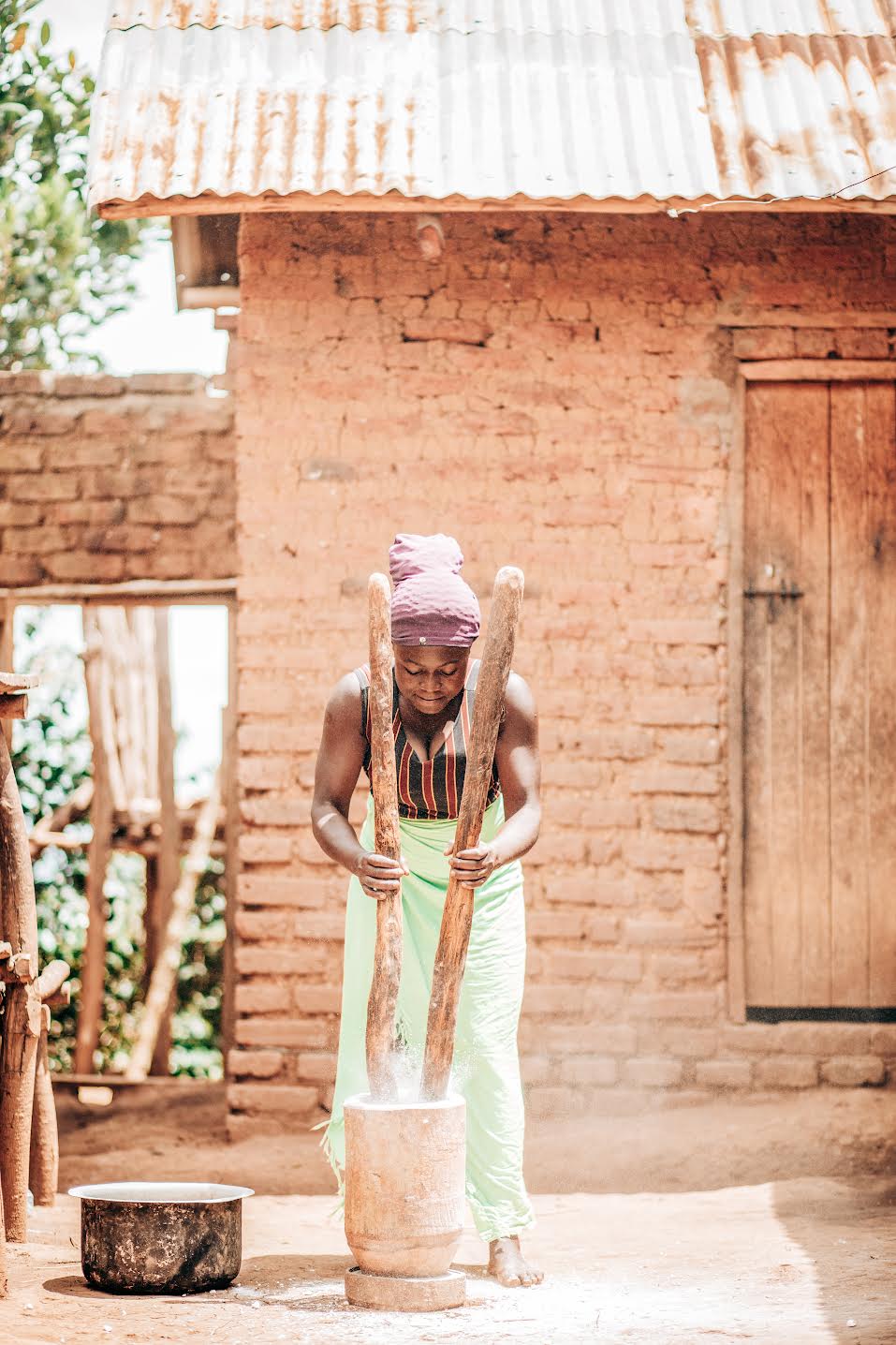
Producer-Led Projects
How we package
our coffees
Barrier packaging designed for specialty coffee.
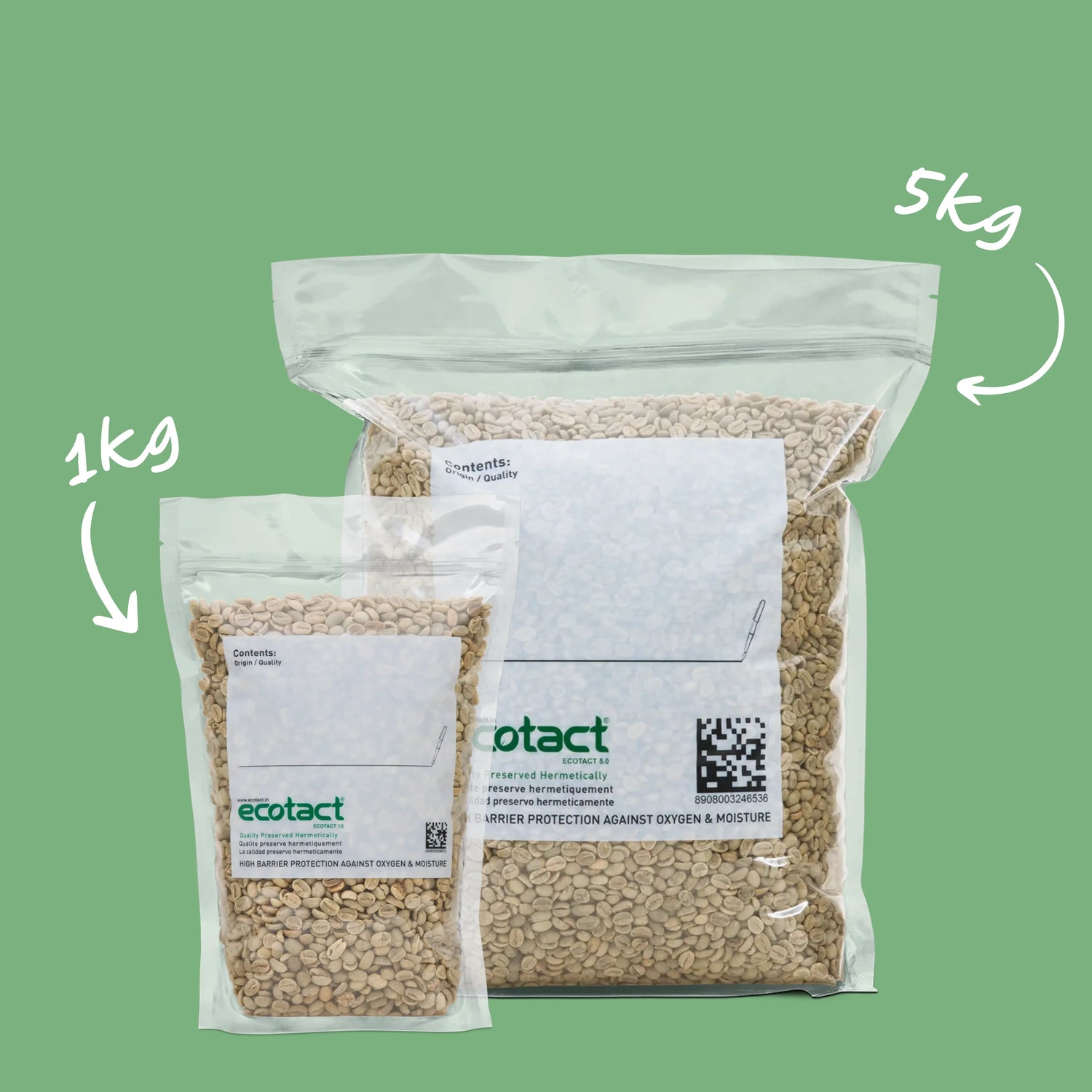
We use Ecotact bags because they offer high-barrier protection against oxygen, moisture, and external contaminants. This helps preserve the quality, aroma, and flavour potential of your green coffee during transport and storage. They're trusted by top producers and importers worldwide.
Heat-Sealed for Maximum Protection
Every bag is professionally heat sealed at our warehouse to lock in freshness. This creates a secure seal that prevents exposure to air or humidity - keeping your green coffee stable, even over long periods.
Convenient Resealable Zip Closures
Once opened, each bag has a resealable zip to help you store and protect the rest of your coffee between roasts. It’s a simple way to reduce waste and maintain freshness - especially helpful for home roasters or sampling.
Portion sizes for any roaster.
Whether you're roasting at home or running a production line, we've got a size to suit. Choose from 0.5kg, 1kg, or 5kg bags - all packed with the same level of care. Smaller volumes make it easy to try new coffees without the commitment.
Responsible packaging choices.
Our bags are made from Graded 7 multi-layer recyclable plastic. While they may not go in your home recycling bin, they are accepted by specialist facilities. More importantly, they reduce waste by dramatically extending the shelf life of your green coffee.