Sourced by Caribbean Goods. Fulfilled by Green Coffee Collective.

Buy high-quality green coffee in small volumes, with fast delivery.

  • About Caribbean Goods

    Caribbean Goods was founded by Javier Gutiérrez, a Guatemalan engineer who grew up in Guatemala City before moving to Scotland in 2017 and completing a degree in Finance at Strathclyde University. The business was built on a simple observation: despite the quality of what Guatemala's coffee farmers produce, the people growing it were receiving very little of the value it generated further up the chain.

    Javier's connection to his partner farmers is not just commercial. He went to school with several of them - among them Cristián Sanchez, son of Guillermo Sanchez, the fifth-generation owner of Finca San José Ocaña. Those childhood friendships have become the foundation of a sourcing network built on genuine trust rather than transactional relationships. Caribbean Goods has personally met around 80% of the farmers in their network; the remainder are small-scale producers compensated through a collective system.

    The business operates with full supply chain transparency, sourcing directly from farms and bypassing the layers of intermediary that have historically extracted value away from producers. Every coffee Caribbean Goods brings to GCC is accompanied by a clear account of where it came from, who grew it, and what they were paid.

  • Why Guatemala

    Guatemala is one of the most geographically diverse coffee-producing countries in the world. Sitting along the Pacific Ring of Fire, the country's highland regions are shaped by a combination of volcanic soils, dramatic altitude variation, and a network of distinct microclimates that allow an unusually wide range of varietals and flavour profiles to develop within a relatively small geographic area.

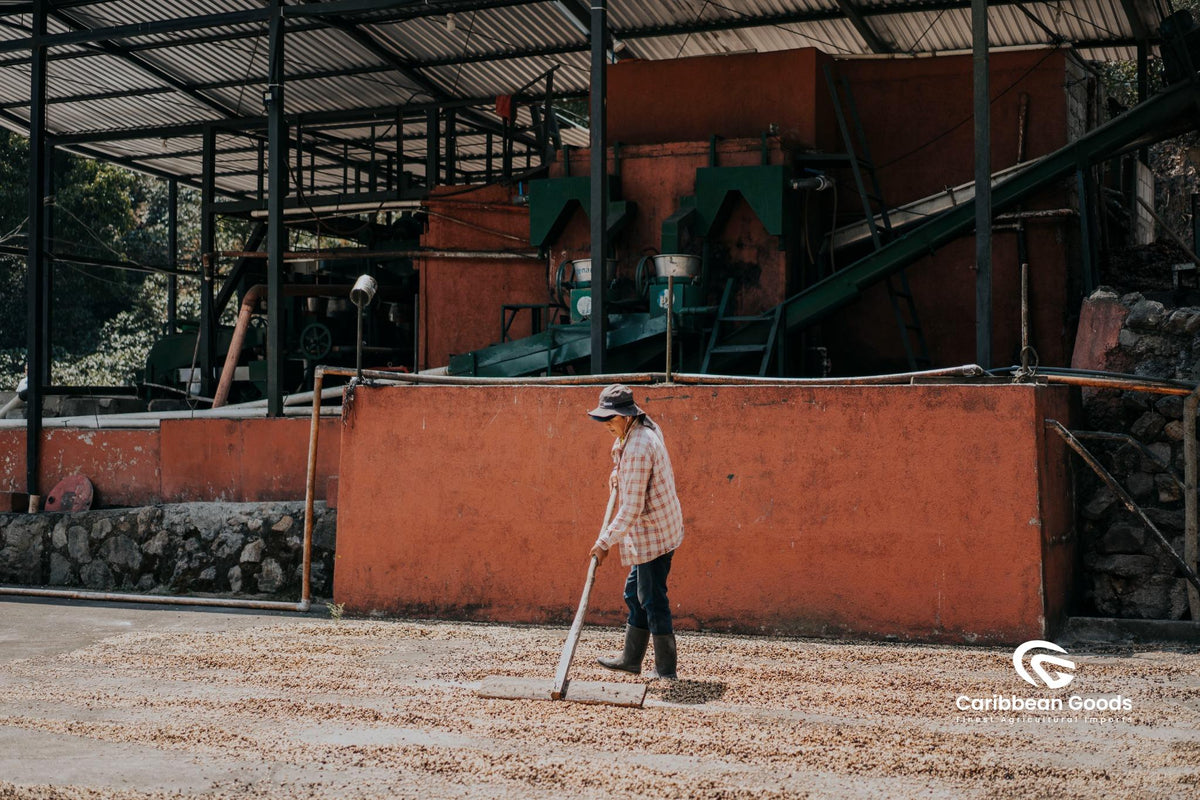
    The majority of Guatemala's specialty coffee is grown in the western and central highlands, across regions including Huehuetenango, Santa Rosa, Palencia, and San Juan Sacatepéquez. Elevations range from around 1,350 to over 2,000 metres above sea level, with volcanic soils delivering the mineral-rich growing conditions that underpin the country's reputation for complex, full-bodied, and well-structured coffees. Native shade trees are widely used across the farms Caribbean Goods works with, contributing to soil health, biodiversity, and slower cherry maturation.

    Guatemala has a long history in the Cup of Excellence — the international competition that has, for decades, been one of the most credible benchmarks of quality in green coffee. Several of Caribbean Goods' partner farms are Cup of Excellence winners or finalists, reflecting a commitment to quality that goes well beyond standard commercial production.

  • The Farms

    Caribbean Goods works with a select group of Guatemalan farms and producer collectives, each chosen for their commitment to quality and their alignment with the direct, transparent sourcing model at the heart of the business.

    Hunchouen
    A collective of 550 small producers in the Tajumuco region of Huehuetenango, formed in 1970. Hunchouen's name - like its sister collective Hunbatz - is drawn from the sixteenth-century Mayan Popol Vuh creation myth, in which two brothers, Hunbatz and Hunchouen, are celebrated as gifted artists, musicians, and craftsmen. The collective operates in the northwestern highlands of Guatemala, an area known for producing some of the country's most expressive and complex coffees.

    Hunbatz
    A collection of small coffee producers in the Cuilco region of Huehuetenango, in the northwestern highlands of Guatemala. Named alongside Hunchouen from the same Mayan creation story, the two collectives represent Caribbean Goods' commitment to working with smallholder communities in one of Guatemala's most important specialty coffee regions.

    Finca El Socorro
    Located in Palencia, 50 kilometres from Guatemala City, El Socorro has been in the de la Cerda family since 1968, when Dr. Mario de la Cerda and his wife Maria Colom de la Cerda bought the farm. In 1980, his son Juan de la Cerda Colom began planting coffee - and today, Juan Diego de la Cerda, the fourth generation, manages the farm alongside his father. El Socorro won 1st place at the Cup of Excellence in 2007 and 2020, and 2nd place in 2021. Juan Diego is actively experimenting with varietals including Java, Red and Yellow Bourbon, Yellow Caturra, Maracaturra, Pacamara, Purpuracea, and Geisha. The farm operates an efficient ecological wet mill that depulps dry and recycles water, treating it before returning it to the forest. 60% of the farm's land is covered with natural forest; coffee cultivation accounts for only 25%.

    Finca Santa Ana & Finca Amatillo
    Two of three neighbouring farms managed as a group by Roberto Díaz Marroquín in the village of Pueblo Nuevo Viñas, Department of Santa Rosa, situated between the Tecuamburro and Pacaya volcanoes on the mountain of La Gavia. Roberto has spent 30 years producing coffee on these farms, managing each yearly crop himself from planting through to processing. The farms grow Bourbon and Catuaí under native shade trees, with strict supervision during harvest to ensure only fully ripe cherries are picked. Both farms have been finalists at the Cup of Excellence over multiple years.

    Finca San José Ocaña
    The Sanchez family has owned Finca San José Ocaña for over 110 years, and it is now in its fifth generation under Guillermo Sanchez - a board member of ANACAFE, the Guatemalan coffee association. The farm is located in San Juan Sacatepéquez at 2,000 metres above sea level, where the high altitude increases cherry density and yields lower volumes of higher quality coffee. The farm has its own wet mill for full quality control and operates as a certified sustainable agricultural operation, with forestry management carried out under government-approved practices. Javier, Caribbean Goods' founder, grew up at school with Guillermo's son Cristián - the relationship that underpins this partnership has roots going back decades.

  • Beyond Coffee - MAIA and Education

    For every 24kg bag of Hunchouen coffee sold, Caribbean Goods contributes to MAIA - the MAIA Impact School in Sololá, Guatemala. To date, Caribbean Goods has donated $4,548.25 USD to MAIA, funding approximately 3,032 meals for students at the school.

    MAIA is Central America's first secondary school designed specifically for Maya girls in rural Guatemala. Guatemala has the worst gender-equity gap in the Western hemisphere - fewer than 20% of Maya girls complete high school. MAIA works to change this through a holistic model combining rigorous academics, socioemotional support, family engagement, and leadership development, serving approximately 300 girls and 2,000 family members each year from rural communities in Sololá.

    The connection between Caribbean Goods and MAIA reflects Javier's wider conviction that education is the most powerful tool available for creating lasting change in the communities that grow the coffee the world drinks. The Hunchouen partnership directly links purchasing decisions to that outcome: roasters buying Hunchouen through GCC are contributing directly to the school with every bag.

  • Planting Trees

    Caribbean Goods has two active tree-planting commitments tied directly to coffee purchases. For every 30kg bag of Hunbatz sold, a tree is planted on behalf of the purchasing roaster. A separate initiative, run in partnership with Pilgrims Coffee - a coffee house and roastery on Holy Island off the Northumbrian coast - saw a donation of 350kg of green coffee translated into 200 trees planted in the Scottish Highlands through the charity Trees for Life, contributing to their rewilding programme. To date, 604 trees have been planted in that grove.

  • What Comes to GCC

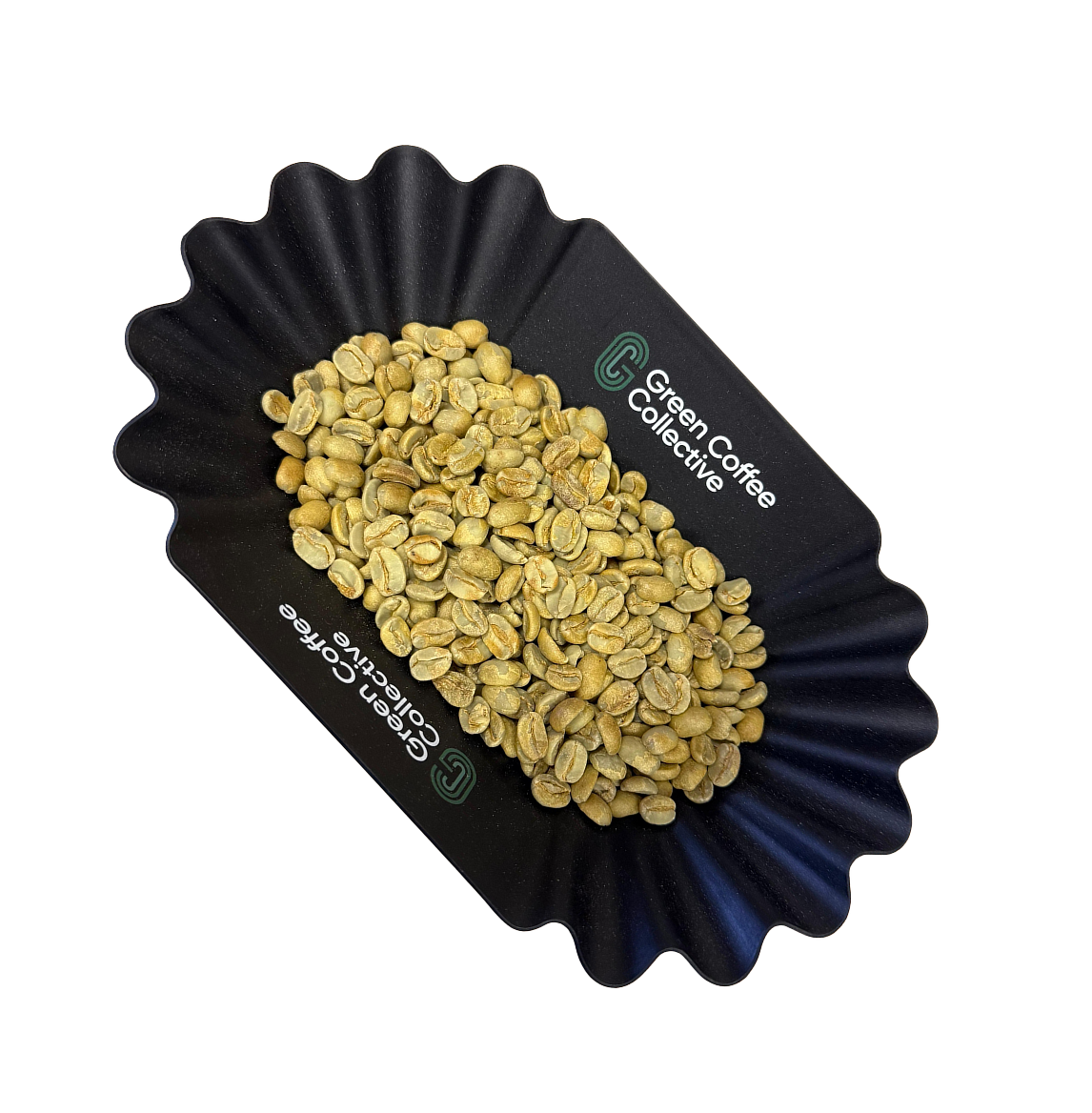
    Caribbean Goods brings a focused selection of Guatemalan green coffees to GCC, spanning both single-estate lots from award-winning farms and coffees from smallholder collectives in Huehuetenango. The range currently includes coffees from Hunchouen, Hunbatz, Finca El Socorro, Finca Santa Ana, Finca Amatillo, and Finca San José Ocaña - each sourced directly and accompanied by full producer information.

How we package
our coffees

Barrier packaging designed for specialty coffee.

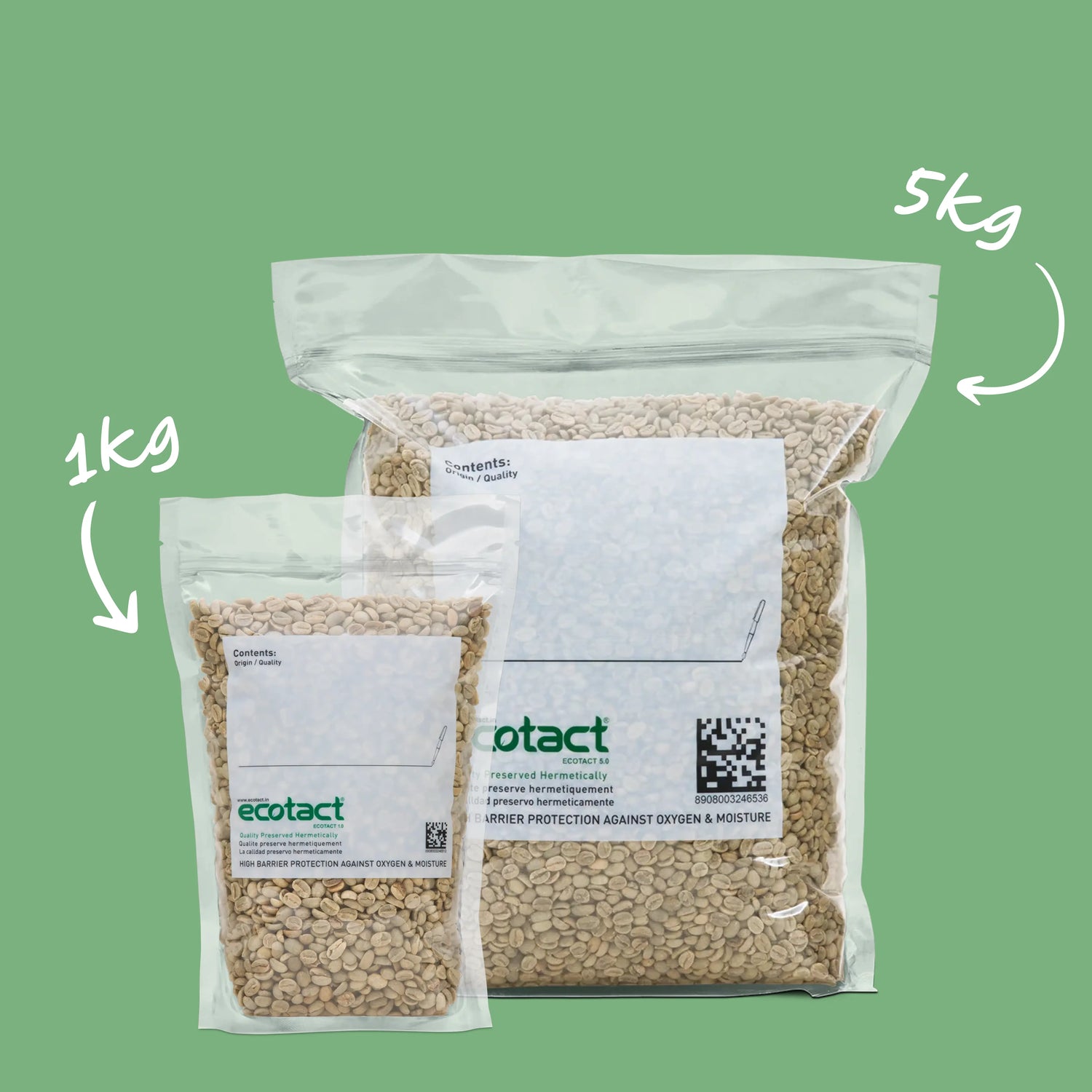
We use Ecotact bags because they offer high-barrier protection against oxygen, moisture, and external contaminants. This helps preserve the quality, aroma, and flavour potential of your green coffee during transport and storage. They're trusted by top producers and importers worldwide.

Heat-Sealed for Maximum Protection

Every bag is professionally heat sealed at our warehouse to lock in freshness. This creates a secure seal that prevents exposure to air or humidity - keeping your green coffee stable, even over long periods.

Convenient Resealable Zip Closures

Once opened, each bag has a resealable zip to help you store and protect the rest of your coffee between roasts. It’s a simple way to reduce waste and maintain freshness - especially helpful for home roasters or sampling.

Portion sizes for any roaster.

Whether you're roasting at home or running a production line, we've got a size to suit. Choose from 0.5kg, 1kg, or 5kg bags - all packed with the same level of care. Smaller volumes make it easy to try new coffees without the commitment.

Responsible packaging choices.

Our bags are made from Graded 7 multi-layer recyclable plastic. While they may not go in your home recycling bin, they are accepted by specialist facilities. More importantly, they reduce waste by dramatically extending the shelf life of your green coffee.
Your questions, answered

Who are Caribbean Goods?

Caribbean Goods is a Guatemalan-founded green coffee importer based in the UK, founded by Javier Gutiérrez. The business sources directly from Guatemalan farmers - many of whom Javier knows personally - with a focus on transparent, ethical trading and fair pay for producers.

Where does Caribbean Goods source their coffee from?

All of Caribbean Goods' green coffee is sourced from Guatemala, across regions including Huehuetenango, Santa Rosa, Palencia, and San Juan Sacatepéquez. They work with both individual estates and smallholder producer collectives.

How does Caribbean Goods ensure fair pay for farmers?

Caribbean Goods sources directly from farmers, bypassing intermediaries. They have personally met around 80% of the farmers in their network. Farmgate prices are transparent and the business publishes details of what farmers receive. For smaller producers within collectives, payment is handled through a collective compensation system.

What is the connection to MAIA?

For every 24kg bag of Hunchouen coffee sold, Caribbean Goods contributes to the MAIA Impact School in Sololá, Guatemala - Central America's first secondary school designed specifically for rural Indigenous young women. To date, Caribbean Goods has donated $4,548.25 USD to MAIA, funding over 3,000 meals for students at the school.

Do Caribbean Goods' coffees have competition credentials?

Yes - several of their partner farms are Cup of Excellence winners or finalists. Finca El Socorro won 1st place at the Cup of Excellence in 2007 and 2020, and 2nd place in 2021. Finca Santa Ana and Finca Amatillo have both been Cup of Excellence finalists over multiple years.