One of the most useful things to understand when buying green coffee beans is how origin shapes flavour. The climate, altitude, soil and processing traditions of each growing region produce distinctly different raw materials and knowing the broad tendencies of each region helps you choose the right green beans for your roasting goals.
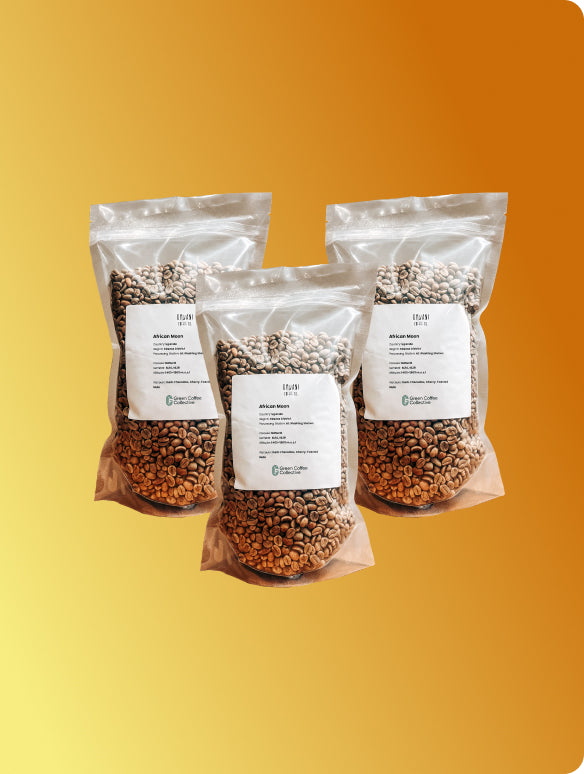
East African green coffee beans from Ethiopia, Kenya, Rwanda, Burundi and Uganda are generally known for brightness, complexity and fruit-forward profiles. Ethiopian green coffee beans in particular are celebrated for floral and berry characteristics, with washed lots tending toward jasmine and citrus and natural-processed lots producing intense blueberry and stone fruit. Kenyan green coffee beans are prized for their bold acidity, full body and blackcurrant or wine-like depth. Rwandan and Burundian lots often sit in between clean, sweet and tea-like when washed.
Central American green coffee beans from Guatemala, Mexico, Costa Rica and Panama tend toward balance medium body, gentle acidity, and approachable flavour profiles that work across a wide range of roast levels. Guatemalan green coffee beans, especially those from high-altitude regions like Huehuetenango, are known for chocolate and hazelnut richness with good structure. Mexican lots are often softer and more subtle, making them a natural fit for espresso blends and decaf processing.
South American green coffee beans primarily from Colombia, Brazil, Ecuador and Peru are the backbone of many espresso blends worldwide. Colombian green coffee beans are versatile and consistent, offering clean citrus, stone fruit and rounded sweetness that suits both filter and espresso. Brazilian green coffee beans are typically fuller-bodied, lower in acidity, and rich in chocolate and nut notes making them one of the most widely used blend bases in the world. Ecuadorian and Peruvian lots offer similar profiles with regional variation.
Asian green coffee beans from India, Indonesia, China, Thailand and Timor-Leste occupy their own flavour territory. Indian and Indonesian lots including the well-known Monsooned Malabar are known for earthy, spiced and full-bodied profiles with low acidity, ideal for dark roasting and espresso blending. Southeast Asian origins from China, Thailand and Myanmar are less widely known but increasingly interesting, particularly for naturally processed lots with distinctive fruit character.