Peru Peru

Peruvian Green Coffee Beans

Explore our selection of Peruvian coffees, where the varied landscape offers a rich tapestry of flavours— from deep chocolatey notes to light, floral hints. Perfect for professional roasters, our selection offers both versatility and quality, ensuring you find the ideal green beans for your roasts. Whether you’re looking for wholesale quantities for larger operations or smaller batches for testing, we provide the options you need. For lots from every other origin, see our complete green coffee list.

Regions
Cajamarca · San Martín · Amazonas
Varieties
Typica · Caturra · Bourbon · Marshell
Harvest
May – Nov
Scale
8th largest coffee producer. 3.2% of global production. (AtlasBig)

In stock now

5 Peruvian coffees in stock · 7 recently sold out

Recently sold out

Still worth a read – most producers come back next harvest.

ORIGIN GUIDE

Buying and roasting Peruvian green coffee

Saskia Chapman Gibbs, Marketing & Sustainability, Green Coffee Collective

Why Peruvian coffee tastes the way it does

Most Peruvian coffee comes from older Arabica varieties: Typica, Caturra and Bourbon, plus Pache, a compact Typica mutation found in the north. After leaf rust hit Peru hard in the early 2010s, many farmers also planted hardier types like Catimor and Marsellesa, and some now grow Geisha too. The older varieties give Peruvian coffee its clean, sweet character.

Nearly all of it grows on the eastern slopes of the Andes, at 1,200–2,200m, where the mountains drop towards the Amazon. Cool nights at altitude slow ripening and build sweetness, while the humidity rising from the jungle keeps the slopes green and misty. Each region has its own leaning: San Martín’s high jungle gives mild coffees with chocolate, caramel and nuts. Cajamarca is brighter, with red fruit and chocolate, and the cloud-forest valleys of Amazonas produce the most delicate cups, with florals and tea-like sweetness.

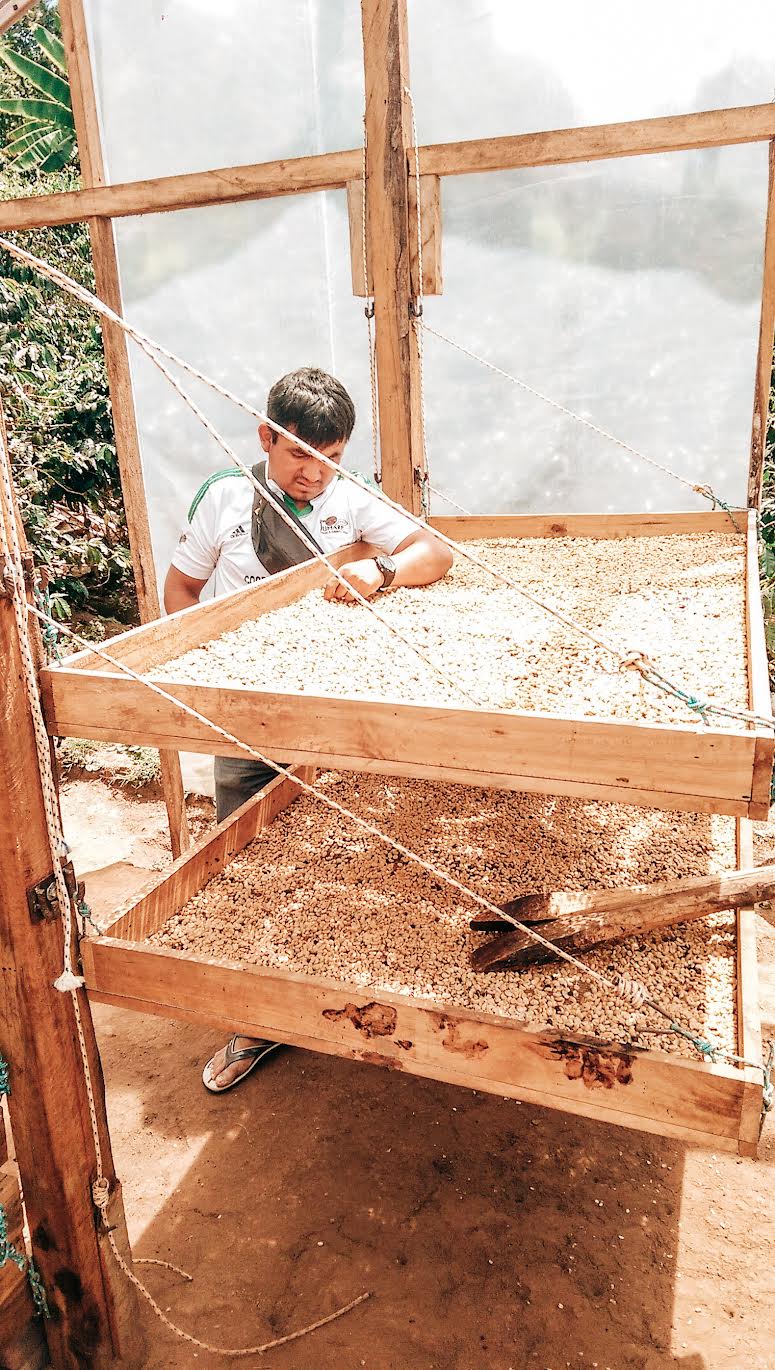
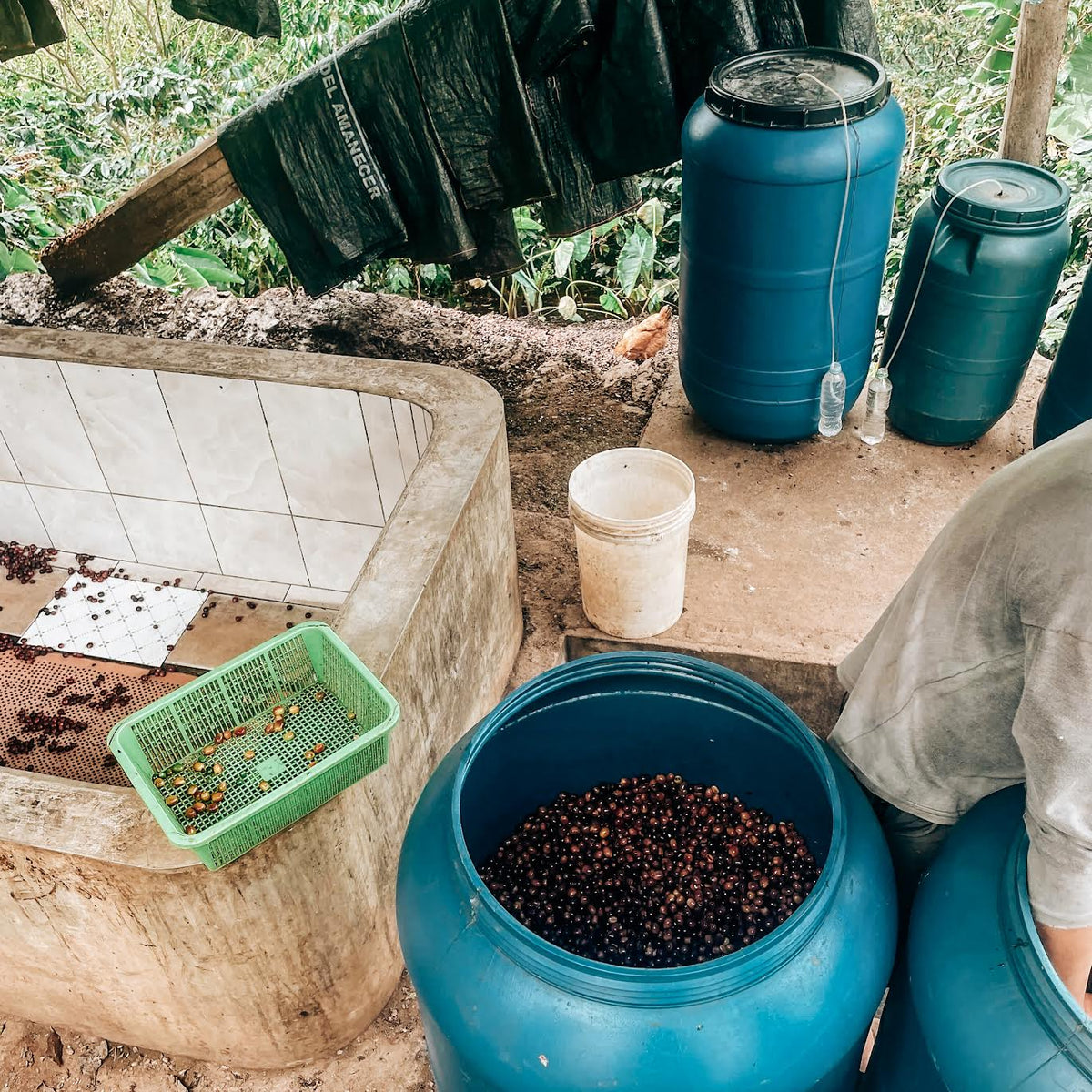
Most Peruvian coffee is washed and dried on the farm by smallholder families, which gives clean, balanced cups that let these regional differences show.

Read: What was the Shining Path, and what did it cost Peru's coffee regions?

How Peruvian coffee is processed

How the cherry is handled after picking changes the cup more than almost anything else.

WashedCherry skin and mucilage removed before drying – clean, bright, origin-expressive cup.5 in stock →What is it?
NaturalWhole cherries dried with fruit intact – produces heavy body and fruit-forward flavour.0 in stockWhat is it?
ExperimentalCoffee fermented in sealed, oxygen-free vessels – producing intense, fruity profiles.0 in stockWhat is it?
DecafCaffeine removed from the green beans before roasting, keeping as much of the origin character as possible.0 in stock

The regions

Translation missing: en.origin.map.title ECUADOR →COLOMBIA →BRAZIL →BOLIVIA Lima Cajamarca San Martín Amazonas Translation missing: en.origin.map.title ECUADOR →COLOMBIA →BRAZIL →BOLIVIA Lima Cajamarca San Martín Amazonas
Cajamarca900–2,200m
One of Peru’s biggest coffee regions, in the far north near Ecuador. Small family farms grow Caturra, Typica and Bourbon, alongside newer varieties like Marsellesa and Geisha.
San Martín1,200–1,800m
Where the Andes meet the Amazon. A major source of Peru’s organic and Fairtrade coffee, grown by families on the forested slopes around Moyobamba, Lamas and El Dorado.
Amazonas1,200–2,000m
Cloud-forest valleys like Utcubamba and Rodríguez de Mendoza, where smallholders grow Typica, Caturra and Bourbon. Expect clarity, florals and tea-like sweetness.

Meet a producer: David Flores (Finca El Morito)

David Flores (Finca El Morito)

Diamante, San Jose de Lourdes, San Ignacio, Cajamarca, Peru ↗

David Flores grew up in a coffee family, as the son of Faustino Flores, a second-generation coffee farmer, and Sara Chilcón Rojas, but his own path into coffee began in 2016, when he experienced specialty coffee first-hand and decided Finca El Morito could be producing something much better. That decision has shaped the farm ever since. What began as two hectares of Caturra and Bourbon in El Diamante, in Cajamarca's San Jose de Lourdes District, has grown into 50 hectares at 1,700 to 1,900 masl, with sustainability and innovation guiding that growth.

It is very much a family operation, and the roles are clear. Faustino oversees the process on the farm, while David takes the coffee out to the world, marketing the green coffee and looking for international buyers. Together the family has worked on better processing and post-harvest techniques and has invested in higher-quality varieties, and they have put their profits back into the farm, with more tanks, tubs, drying areas and warehouses.

They farm with the forest that surrounds them in mind. The family uses organic compost, keeps synthetic fertiliser to a minimum and brings technology into their post-harvest processing, and they've started developing management activities for soil conservation, water, native species and organic compost.

Khipu has sourced from Finca El Morito for four years. They met David at Expo Cajamarca in 2022 and cupped with the family at their Jaén office in August 2023, where they were introduced to the Marshell, and in 2025 they finally visited the farm in El Diamante.

From farm to our warehouse

Peruvian coffee is grown almost entirely by smallholder families, most farming just a few hectares. Farmers usually pick, wet-process and dry their coffee themselves, then sell it as parchment, often to a local cooperative. Peru’s cooperatives are some of the strongest in Latin America: they gather coffee from hundreds of members, handle organic and Fairtrade certification, and arrange dry milling and export, often through the northern port of Paita.

We buy Peruvian coffee through Khipu, a specialty importer that works directly with producers in Cajamarca and Amazonas. Khipu’s team visits farms, cups at regional competitions and builds relationships with individual families, some of whom they’ve bought from for several years running. That lets us name the farm, the producer and the variety on every lot, and share the story behind it.

Lots change from harvest to harvest. Peru’s harvest runs from roughly May to November, depending on altitude, and each crop cups differently. We’d rather buy what’s cupping best that season than repeat a name for the sake of it. If you liked a past lot, join the arrivals list and we’ll tell you what’s closest when new crop lands.

Read: Industry Insight: How Land Reform Shaped Peru's Coffee

Peruvian lots we've sourced

Every lot we've brought in, with our team's cupping score where we have one. A good guide to what next season's will be like.

Past lots on record
14
Average cup score (12 scored)
85.6
Highest
88.0 Finca La Trinidad - Alexander Robles Loaiza - Geisha - Nanolot
Peruvian lots we've sourced
Lot Region Process Crop Score
Finca La Trinidad - Alexander Robles Loaiza - Geisha - NanolotPeach, Lemonade, Green Tea Calca, Cusco Extended Fermentation 24/25 88.0
Marin Family - Black Honey GeishaCaramel, Tangering, Black Tea Perené Honey 23/24 87.5
La Concordia - Melvin Campos IngaCitrus Fruits, Pear, Brown Sugar Lonya Grande Extended Fermentation 23/24 86.5
El Diamante– – Washed c. 22/23 86.0
Montes Family Natural– – Natural c. 23/24 85.75
Consuelo Rubio– – Anaerobic c. 22/23 85.25
Raul Flores– – Washed c. 22/23 85.25
Agustina & FamiliaOrange, Cherry Huabal Washed 23/24 85.0
Jorge Chavez– – Washed c. 22/23 85.0
Rogelio Pena Huaman - Family Farm LotDark Chocolate, Caramel, Green Apple San José de Lourdes Multiple 23/24 85.0
El Fuerte Viteno– – Washed c. 22/23 84.5
Chacra D'Dago– – Washed c. 22/23 84.0
Cusco Microlot– – Washed c. 22/23 N/A
El Gran Mirador– – Washed c. 22/23 N/A

When to buy Peruvian green coffee

Fresh-crop Peruvian lots arrive months after the harvest ends. Buy on arrival for the brightest cup.

Buying Peruvian coffee in volume

From a first sample bag to a container, without the import paperwork.

0.5 – 5KG Sample and small batch Open to everyone. Most lots offer a sample size so you can cup before committing.Shop in-stock lots →
10 – 20KG Wholesale account Approved roasters see 10kg and 20kg sizes and trade pricing when signed in.Apply for wholesale →
FULL SACKS & CONTAINERS Through our import partners Sacks, pallets and full containers from the importers we buy Peruvian coffee from. Khipu

Roasting Peruvian coffee

How Peruvian coffee behaves in the roaster depends on where it was grown and how it was processed. Most Peruvian lots are washed and high-grown, so the beans are dense and take heat well. Start with a solid charge and a good push of heat early on, then ease off as you approach first crack to avoid scorching. Lower-grown coffees, like some from San Martín, are a little softer and need a gentler approach. Experimental lots, such as anaerobic fermentations, also need a gentler start and shorter development, so their fermentation flavours aren’t lost under roasty notes. Roast level depends on what you want from the cup: lighter roasts bring out florals and stone fruit, while medium roasts lean into nuts, caramel and brown sugar.

Never roasted coffee before? These are raw, unroasted beans – they need roasting before you can brew them. It's easier than it sounds.

Peruvian green coffee FAQs

What does Peruvian coffee taste like?

Peruvian coffee is usually clean and sweet, with a balanced body. It varies by region: San Martín leans mild and chocolatey, Cajamarca is brighter with red fruit, and Amazonas gives delicate, floral cups. Experimental lots can be much fruitier and more intense.