The Coffee Trade Explained: How Coffee Is Graded, Priced and Traded Globally

Coffee moves through one of the most complex agricultural trading systems in the world. Every year, hundreds of millions of bags travel from farms in tropical regions to roasteries across Europe, North America and Asia. Along the way, coffee passes through exporters, importers, warehouses, quality laboratories and financial markets before it ever reaches a roaster.
For most coffee drinkers, this system remains largely invisible. Even for many roasters, the mechanics behind the coffee trade - how coffee is graded, how prices are determined, and how contracts are negotiated - can be difficult to understand without industry experience.
Understanding how the coffee trade works helps explain several things that otherwise appear confusing. It clarifies why the coffee market price today changes constantly, why two coffees from the same country can sell at very different prices, and why specialty coffees are often priced far above commodity coffee.
This article explores how coffee is graded, priced and traded globally, and how the modern coffee trade connects producers, exporters, importers and roasters. If you’re new to sourcing green coffee, it also builds on the foundations covered in our guide to green coffee basics, which explains how coffee moves from farm to roastery.
What the Coffee Trade Actually Refers To
The term coffee trade describes the global system through which coffee moves from farms to international buyers. Unlike many agricultural products that are consumed locally, most coffee must travel long distances between producing countries and consumer markets.
Coffee is grown primarily within the “coffee belt”, a band of tropical regions around the equator. Countries such as Brazil, Colombia, Ethiopia, Vietnam and Honduras produce vast quantities of coffee each year, while the largest consuming markets are located much further north.
Because of this geographical separation, the coffee trade depends on an international network of specialised actors. Coffee typically moves through several stages before reaching a roaster. Farmers harvest and process the coffee cherries, exporters prepare and grade the green coffee for shipment, importers manage transport and storage, and roasters ultimately purchase the beans for roasting.
Each of these stages interacts with other factors that shape the final cup. The environment where coffee grows - often described through coffee terroir - influences how cherries develop on the tree, while the plant’s genetics, explained in our guide to coffee varietals and cultivars, determines how the plant responds to those growing conditions.
By the time coffee enters international trade, its flavour potential has already been shaped by these agricultural decisions long before the beans reach a roastery.
How Green Coffee Is Graded Before It Is Sold
Before coffee enters international trade, it must first be evaluated and organised into lots that buyers can assess. This process typically happens at a dry mill, where coffee is hulled, sorted and graded after processing.
Grading systems vary slightly from country to country, but most follow similar principles. Physical grading evaluates characteristics such as bean size, moisture content and defect count. These measurements help exporters create consistent lots and ensure the coffee meets export standards.
Many of these measurements are part of the physical analysis of green coffee, where factors such as moisture content, density and water activity help determine whether a coffee is stable enough for storage and shipping. These characteristics also influence how the coffee behaves during roasting.
Alongside physical grading, most specialty coffee is also evaluated through cupping, a sensory assessment that measures aroma, flavour, acidity, body and balance. Coffees scoring above certain thresholds are typically classified as specialty coffee and sold into markets that prioritise quality rather than volume.
Processing method also plays a role in how coffee is evaluated. Washed, natural and honey-processed coffees each develop different flavour characteristics depending on how the fruit is handled after harvest.
How Coffee Prices Are Determined
The global coffee trade operates within a pricing system built around commodity markets. Arabica coffee is traded on the Intercontinental Exchange (ICE) in New York, commonly known as the C market, while robusta coffee is traded on the London exchange.
These markets establish a benchmark price that fluctuates constantly as traders react to weather forecasts, harvest estimates, currency movements and global demand. When people search for the coffee market price today or the arabica coffee price per kg, they are usually referring to this futures price.
However, the commodity price alone rarely reflects the actual price paid for green coffee.
Most coffees are sold at a differential, which adjusts the commodity price according to the characteristics of a specific coffee. Factors such as quality, origin reputation, processing method and lot size all influence this adjustment.
A high-scoring Ethiopian coffee might trade at a significant premium above the C market price, while lower-grade coffees might trade at a discount. These differentials allow both commodity and specialty coffee to operate within the same pricing framework while reflecting differences in quality and demand.
Over the past two decades, the growth of specialty coffee has also changed how buyers evaluate quality. Roasters increasingly consider factors such as origin transparency, processing methods and varietal selection when determining how much they are willing to pay for a coffee.
Where Importers Fit Into the Coffee Trade
Although the idea of direct relationships between farmers and roasters is often discussed in specialty coffee, the reality is that most coffee still moves through exporters and importers.
Exporters handle milling, grading and international sales at origin. Importers manage shipping logistics, warehousing and distribution in consuming countries. This structure allows roasters to purchase coffee without managing complex international logistics themselves.
For smaller roasters in particular, working with importers makes the global coffee trade far more accessible. Importers provide access to coffees from multiple producing countries while handling the risks associated with shipping, financing and storage.
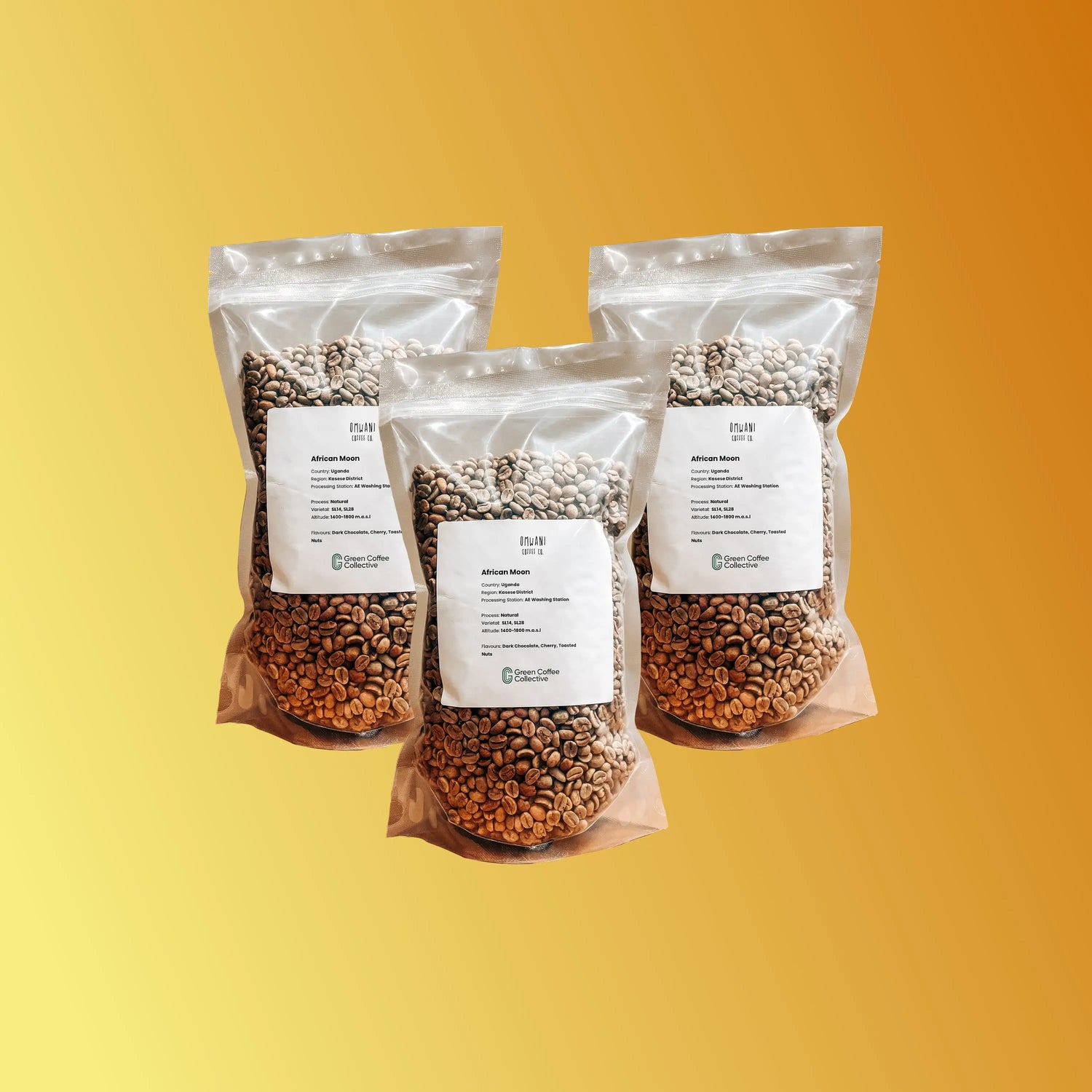
At Green Coffee Collective, we operate within this part of the coffee trade by working with trusted sourcing partners and exporters at origin while making smaller quantities of green coffee accessible to roasters and home enthusiasts. In practice, this means coffees that are typically shipped and traded in large volumes can be divided into smaller lots without losing the traceability or context behind them.
This structure sits somewhere between the traditional importer model and the needs of smaller-scale buyers. Producers and exporters continue to handle the work they specialise in at origin, while warehousing, logistics and distribution happen closer to roasting markets.
Different sourcing approaches also exist within the specialty sector. Some coffees are purchased through spot buying, while others are secured through longer-term relationships or forward contracts. These sourcing models often overlap with concepts such as direct trade coffee, which attempt to create closer relationships between producers and buyers.
Why Coffee Prices Are Rising
Coffee prices have risen significantly in recent years, and the reasons go far beyond simple supply and demand.
Climate volatility has begun to affect harvest reliability in many producing regions. At the same time, rising labour costs, fertiliser prices and currency fluctuations are increasing the cost of producing coffee at origin.
When these pressures combine with fluctuations in the global commodity market, the result is greater price volatility across the coffee trade. This volatility affects both commodity coffee and specialty coffee markets, although the effects can appear differently depending on the type of coffee being traded.
Understanding these pressures helps explain why the coffee commodity price can change rapidly and why specialty coffee pricing sometimes diverges significantly from the C market.
Conclusion
The global coffee trade is a complex system connecting farmers, exporters, importers and roasters across continents. Coffee is graded, priced and traded through a combination of physical evaluation, commodity markets and quality-based premiums.
For anyone exploring green coffee more deeply, understanding how this system works provides important context for sourcing decisions and price changes. It also highlights how many layers of expertise and infrastructure are involved in bringing coffee from farm to roastery.
When viewed alongside the agricultural foundations of coffee - including terroir, varietal selection, and processing methods - the coffee trade becomes easier to understand as part of the broader journey that shapes every cup.
Questions fréquemment posées
How is coffee traded globally?
How is coffee traded as a commodity?
How is the price of coffee determined?
What is the coffee C market?
Why are coffee prices rising?
How much coffee is traded globally each year?
Why do specialty coffees cost more than commodity coffee?
How does the coffee trade affect roasters?
Articles connexes susceptibles de vous intéresser
-
 12 min readGreen Coffee Basics
How to Buy Green Coffee Beans & Choose the Right Supplier
Green coffee beans sit at the foundation of every roast. Long before flavour develops in the drum, a coffee’s character...
How to Buy Green Coffee Beans & Choose the Right Supplier
Green coffee beans sit at the foundation of every roast. Long before flavour develops in the drum, a coffee’s character is shaped by how it was grown, processed, prepared, graded,...
-
 5 min readGreen Coffee Basics
Coffee Bean Species Explained: Arabica, Robusta, Liberica, Excelsa, Racemosa and Stenophylla
Learn the differences between coffee bean species including Arabica, Robusta, Liberica, Excelsa, Racemosa and Stenophylla, and how each shapes flavour,...
Coffee Bean Species Explained: Arabica, Robusta, Liberica, Excelsa, Racemosa and Stenophylla
Learn the differences between coffee bean species including Arabica, Robusta, Liberica, Excelsa, Racemosa and Stenophylla, and how each shapes flavour, farming and the future of coffee.


Dale Goulding
Co-fondateur, Green Coffee Collective