Best Coffee Beans: What Every Small Roaster Should Know

Table of Contents
The difference between a forgettable cup and one that stops a customer mid-sip comes down to a single decision: the beans you choose to roast. For small roasters looking to sharpen their craft and build a loyal customer base, understanding what separates ordinary green coffee from the best coffee beans available is not just helpful, it is essential.
The specialty coffee market has never been more competitive, and customers today are more educated than ever. They know their origins, they ask about processing methods, and they can taste the difference between a carefully sourced lot and a mediocre one. That puts the burden squarely on your shoulders to make smarter, more informed purchasing decisions.
In this guide, you will find a practical breakdown of the key factors every small roaster should evaluate when selecting beans, from origin characteristics and altitude to processing styles and flavor profiles. Whether you are refining your current lineup or building a new menu from scratch, these insights will help you source with confidence and roast with purpose.
The Best Cup Starts Before the Roast
The UK coffee market tells a compelling story about where quality pressure is heading. Valued at USD 9,236 million in 2026 and forecast to reach USD 11,122 million by 2034 at a CAGR of 2.35%, that growth is not being driven by supermarket instant or commodity blends. Specialty and single-origin formats are leading the expansion, and with them comes a consumer base that expects more than a well-designed bag. More volume at specialty quality means sourcing standards across the entire supply chain face proportionally greater scrutiny. For small-batch roasters, that pressure does not begin at the roaster; it begins at origin.
Consumer expectations in 2026 have shifted in ways that directly affect every sourcing decision a roaster makes. Traceability, mycotoxin-free credentials, and farm-level transparency have moved from niche wellness concerns to mainstream purchase drivers in UK specialty retail. Lab testing disclosure has become a credibility threshold for brands competing in the premium segment, with buyers now evaluating coffees on documented sourcing processes alongside flavour. Critically, organic certification alone does not guarantee clean green beans; mycotoxin risk is a function of harvesting timing, processing method, drying conditions, and storage, none of which are captured by a certification label. Roasters who cannot trace their green coffee back through those variables are already working with an information deficit their end customers are increasingly aware of.
Most content ranking for "best coffee beans" does nothing to address this. The dominant format is the affiliate-driven retail list: a curated selection of finished roasted bags, ranked by taste notes and brand reputation, with sourcing transparency rarely examined. These roundups evaluate the roasted product without asking what made the green bean worth roasting in the first place. They tell a consumer which bag to buy; they offer a roaster no framework for producing a bag worth buying.
This article takes a different position. The best roasted coffee is not chosen from a finished product list; it is built from sourcing decisions made before a single green bean enters a drum. Varietal selection, processing method, moisture content, defect rates, and supply chain transparency at origin level determine every flavour and quality outcome downstream. If you are a roaster, the question is not which roasted bag ranks highest this year. The question is which green coffee gives you the raw material to produce something that earns that ranking yourself.
Species and Variety: Why Arabica Is Only the Starting Point
Arabica accounts for roughly 75% of global coffee production and dominates the specialty segment entirely. Its lower caffeine content, around 1.5% compared to Robusta's approximately 2.7%, reflects a fundamentally different genetic architecture that produces more complex sugars, delicate acids, and aromatic precursors. Those characteristics make Arabica the logical starting point for any serious quality conversation. However, species classification is a floor, not a ceiling. A poorly processed, underdeveloped Arabica grown at low altitude will consistently underperform a well-farmed, expertly handled lot from almost any origin. Species tells you what's possible; everything else determines what you actually get.
The real cup differentiation happens at varietal level, and the differences are significant enough to change your roast approach entirely. Bourbon, tracing its lineage to Réunion Island in the early 1700s, delivers rounded sweetness, caramel, and gentle spice with a medium body that responds well to medium-light development. SL28, developed by Kenya's Scott Laboratories in the 1930s, produces a completely different cup: blackcurrant, grapefruit, and a bright juicy acidity that benefits from a different heat application profile. Gesha, originating from Ethiopia's Gori Gesha forest and now grown experimentally across origins including El Salvador, expresses jasmine, bergamot, and tropical fruit at exceptional lots commanding prices 10 to 50 times that of commodity-grade coffee. Pacamara adds complexity through large bean size and dense structure; Typica rewards patience with clean, delicate clarity. As current varietal guides confirm, some varietals reveal their best qualities through washed processing while others need natural or anaerobic methods to unlock their full potential. That distinction directly affects your roast curve planning and target development time.
Robusta does have a legitimate role in traditional Italian-style espresso blends, contributing body, crema stability, and caffeine intensity. For the small-batch specialty roaster building a reputation on cup quality and traceability, however, the varietal decision within Arabica is where the work happens.
On the sourcing side, the most actionable step you can take is demanding cultivar-level documentation from your green bean supplier. "Colombian Arabica" is commercially meaningless for roast planning purposes. Knowing whether you have Caturra, Pink Bourbon, or Castillo on your bench changes your approach to charge temperature, rate of rise, and first crack timing. The specialty community in 2026 is actively chasing Sidra, Pink Bourbon, and F1 hybrids, with Pink Bourbon in particular generating significant interest for its stone fruit character and silky finish. These emerging varietals represent a genuine commercial differentiation opportunity for micro-roasters willing to source and communicate at this level of detail.
Origin and Terroir: Matching Provenance to Your Roaster's Identity
Where you source your green coffee says as much about your roastery as the roast profile you develop. Origin is not simply a label; it is a set of growing conditions, processing decisions, and genetic material that shapes every variable your roaster will encounter.
Ethiopian naturals from Yirgacheffe and Guji remain among the most sought-after origins in the UK specialty community heading into 2026. Ethiopia hosts over 6,000 unique coffee varieties across its highland growing regions, and Guji naturals in particular, grown at altitudes between 1,800 and 2,200 metres, produce the dense, sugar-rich beans that translate into the complex berry, stone fruit, and floral notes that light roasting rewards so generously. These profiles align directly with what UK specialty buyers are actively seeking in 2026, and a Guji natural on your retail shelf signals immediately that your sourcing standards are serious. Coffee Review's Top 50 Coffees of 2025 reinforces the continued global prestige of Ethiopian origins, making them a credible anchor for any roaster's range.
Kenyan washed lots from Nyeri, Kirinyaga, and Kiambu cooperatives occupy a different but equally important space. The Kenyan double-washed process produces the clean, intensely structured cup that defines the classic UK specialty palate; bright, high-acidity, blackcurrant-forward, and persistent on the finish. These lots command genuine premiums at retail and give roasters a strong justification for positioning their products above commodity-grade competition.
Colombian micro-lots from Huila and Nariño offer a different kind of value: versatility. High-altitude growing conditions in both departments produce beans that respond well across roast levels, making them workhorses for roasters who need a reliable core-range offering alongside more experimental naturals or co-ferments.
Terroir variables matter practically, not just philosophically. Altitude, soil composition, and seasonal rainfall directly influence green bean density, moisture content, and screen size. On small-batch machines, a denser high-grown bean will behave differently through first crack than a lower-grown lot with higher moisture, and understanding that before the green arrives saves costly profiling time.
For roasters building a recognisable identity, consistent access across harvests matters as much as the flavour profile itself. Sourcing spot from a warehouse stocking diverse origins, with no minimum contracts and rapid despatch, is what makes that consistency achievable in practice.
Processing Method: How It Shapes Your Roast, Not Just the Flavour
Processing method is one of the most consequential variables in green coffee selection, yet most buying guides treat it purely as a flavour story. For roasters, it is equally a structural and thermal story: the method used to remove the coffee cherry affects bean density, residual sugar load, moisture content, and how the bean absorbs heat in the drum.
Washed coffees have the fruit skin and mucilage removed before drying, leaving structurally dense, compositionally uniform green beans. Approximately 60% of global specialty coffee is washed-processed, and the reason is partly practical: these beans behave predictably in the drum, absorbing heat evenly and responding consistently to profiling decisions. For roasters dialling in repeatable curves on machines like the Aillio Bullet R1 or Kaleido roasters, washed lots are the natural starting point. Lower residual sugars also mean a forgiving Maillard phase with less risk of scorching, making them well suited for learning new profiles or new origins.
Natural (dry-processed) coffees are dried with the full fruit intact, which allows residual sugars to migrate into the bean structure over weeks of drying. The result is a bean that carries a significantly higher sugar load into the roaster, making uneven heat absorption and scorching genuine risks if charge temperature or rate-of-rise is misjudged. First-crack monitoring demands closer attention, as the sugar-rich outer layers can over-develop before the bean core has caught up. The ICT Coffee processing guide frames this trade-off precisely: naturals reward careful profiling with intense fruit and wine-like complexity, but they are unforgiving of errors that washed beans would absorb without consequence.
Honey process coffees retain varying levels of mucilage after skin removal, classified broadly as yellow, red, or black honey depending on how much is left on. They occupy genuine structural middle ground: more sugar presence than washed, requiring slightly more caution around the Maillard phase, but without the full unpredictability of a natural. For roasters wanting fruit-forward complexity without committing to a full natural profile recalibration, honey lots are a practical and commercially appealing step.
Cofermented and anaerobic lots have emerged as the most discussed green coffee category in 2026 specialty communities. A 2024 peer-reviewed study published in Heliyon confirmed that processing method produces statistically significant compositional differences across green and roasted beans, validating what working roasters already sense: coferments are not simply flavoured naturals. Their elevated sugar content requires adjusted profiles, typically lower charge temperatures and an extended drying phase, to avoid scorching during the Maillard reaction.
The dimension that consumer-facing roundups consistently miss is the direct relationship between processing method and green bean moisture at the point of roasting. Washed beans typically arrive at 10 to 12% moisture; naturals run slightly higher due to retained fruit matter and longer drying timelines. This moisture differential has immediate practical consequences: higher-moisture naturals require greater initial energy input, while dense, drier washed beans can scorch if charge temperature is set too high. On small-batch drum machines operating in the under-100kg range, where thermal mass is limited and temperature swings respond quickly, getting this starting point wrong costs you the lot.
Traceability: What Clean Coffee Claims Actually Mean Upstream
In 2026, traceability has crossed a threshold. It is no longer a premium feature that progressive roasters offer voluntarily; it is a baseline commercial expectation from UK retail buyers, subscription services, and increasingly informed end consumers. Lab testing data from 2026 roundups confirms a growing gap between roasters who claim clean coffee credentials and those who can actually publish the evidence behind them. Roasters who cannot close that gap upstream are directly exposed to losing shelf space and wholesale accounts to those who can.
The risk dimension here is practical and documented. A 2015 Food Control study analysed 103 commercial coffee samples and found that five exceeded EU ochratoxin A limits. Contamination is not a theoretical concern confined to low-grade commodity supply chains; it exists in commercial-grade green coffee moving through opaque multi-tier import routes. Understanding what mold-free claims actually require means recognising that "tested" and "published results" are two entirely different standards. Undocumented green beans create quality-drift exposure at every stage from warehouse arrival through finished retail product, and when a batch underperforms, the absence of lot-level records makes diagnosing and resolving the problem significantly harder.
Farm-level transparency has a defined minimum standard that goes well beyond country of origin. A credible provenance record includes the producer or cooperative name, the specific lot number and harvest date, the processing station, and the export certification linked to what physically arrived. The EU Deforestation Regulation now adds GPS-coordinate-level geolocation of sourcing as a compliance requirement for any business trading in the EU, meaning this level of documentation is a legal floor, not a specialist ask.
Ethical certifications follow similar logic. Rainforest Alliance, Fairtrade, and organic status are increasingly contract requirements rather than differentiators; major foodservice buyers now use them as supplier qualification criteria. Roasters sourcing green beans should evaluate certification status at the point of supplier selection, not as an afterthought. Specialist traceability frameworks used by award-winning roasters demonstrate that when documentation cannot be linked back through exporter and lot-level records, confidence in the supply relationship should drop immediately, regardless of how compelling the marketing narrative sounds. Suppliers who source directly or through verified importers and who provide complete provenance documentation give you the paper trail needed to make claims your own customers can trust.
Lot Size and Cash Flow: The Under-100kg/Month Reality
The economics of green coffee purchasing rarely feature in buying guides aimed at consumers, but for roasters operating under 100kg per month, lot size is one of the most consequential decisions in the business. Standard green coffee import units arrive as full sacks: 60kg bags from most African and Central American origins, 70kg bags from Colombia. For a roaster turning 60 to 80kg per month on a small-batch drum machine, a single sack represents the entire month's raw material commitment, concentrated in one origin, purchased upfront before a single retail bag has been sold. Factor in the approximately 15% roast weight loss that occurs during the roasting process itself, and that 60kg of green coffee yields roughly 51kg of roasted product. The capital is committed; the yield is already reduced before a customer places an order.
The storage dimension compounds the problem. Green coffee requires cool, dry, well-ventilated conditions to maintain freshness, with a practical quality window of six to nine months when stored correctly. Most small-batch roasters operating from home units or shared commercial spaces cannot sustain those conditions reliably across a large stock volume. A speculative full-sack purchase that sits partially used for ten to twelve weeks in a domestic garage or poorly ventilated storage unit is not a minor inconvenience; it is a direct threat to the lot quality that justifies the premium price point, and a tangible erosion of margins that already run thin at the net level for wholesale-focused roasters.
Spot purchasing at sub-sack increments changes this structural reality entirely. Buying from 5kg with no minimum order requirement allows a roaster to carry three, four, or five origins simultaneously without the cash flow exposure of full-sack commitments on each. A 10kg parcel of an Ethiopian natural, a 5kg trial of a Guatemalan washed lot, and a 15kg working stock of a Brazilian for espresso blending represents genuine inventory diversity at a fraction of the working capital that three full sacks would demand. That diversity is not merely a financial convenience; it is a product development capability. The 2026 specialty market increasingly favours roasters with defined origin stories and demonstrable traceability, and that competitive position requires consistent access to varied lots rather than a single over-committed sack per cycle.
No-contract sourcing adds a further operational advantage that full-sack purchasing structurally prevents: the ability to respond to seasonal availability. High-demand micro-lots and process-forward offerings, including coferments and experimental naturals, move quickly through the supply chain. A roaster locked into a volume commitment with a single supplier, or still working through a 70kg Colombia sack, cannot pivot to a desirable Kenyan AA that arrives in a short seasonal window. Flexibility is not simply a cash flow benefit; it is a sourcing capability that directly shapes what a roaster can offer their customers.
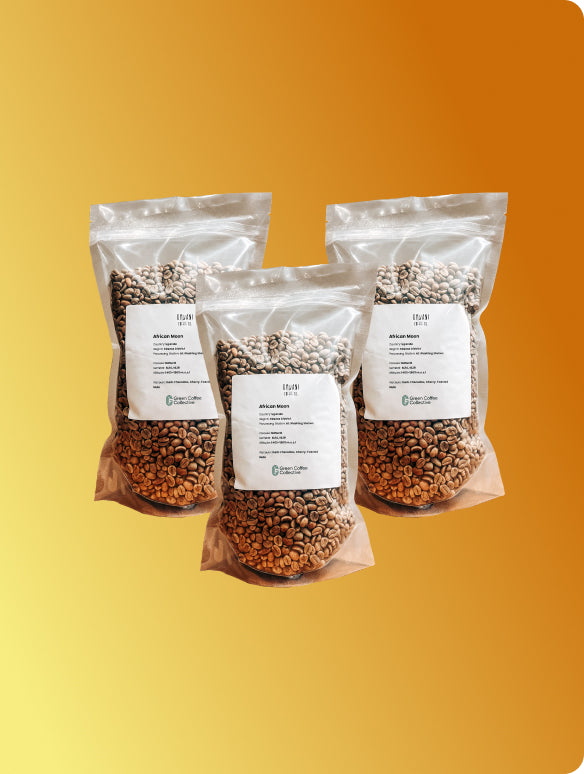
Green Coffee Collective's Belfast warehouse addresses each of these constraints directly. Green lots are available from 5kg with no contracts and no minimums, shipped within 24 hours, which means a roaster can respond to demand signals, trial new origins, and maintain a diversified green inventory without tying up working capital in full-sack commitments or relying on storage infrastructure they do not have. For the under-100kg per month roaster, that structural flexibility is not a convenience feature; it is the foundation on which a viable, quality-driven business is built.
Green Stock Freshness and Warehouse Logistics: Why 24-Hour Dispatch Matters
Green coffee deteriorates. This is not a storage footnote; it is a quality-critical fact that every roaster sourcing green beans needs to account for when evaluating a supplier. The Specialty Coffee Association places specialty-grade green coffee within a moisture content band of approximately 10 to 12 percent, and water activity should remain below 0.65 to prevent mold and accelerated staling. Even beans stored within correct parameters will age progressively: flavour compounds degrade, roastability suffers, and the cup develops what the trade calls past-crop or woody characteristics. These are not subtle defects. They are the fingerprints of inventory that has been held too long or warehoused poorly, and they compound at every stage of a supply chain that is not actively managed.
The logistical argument for UK-held stock follows directly from this. Direct import from origin is structurally slow. Coffee moves through processing stations, drying beds, export warehouses, ports, and shipping containers before it reaches a UK roastery, and lead times of four to six weeks are the norm rather than the exception. For a roaster running lean on a selling lot, that lag is commercially damaging. A supplier able to dispatch within 24 hours from UK-held warehouse stock removes this exposure entirely, allowing rapid replenishment, the ability to respond to unexpected wholesale growth or seasonal demand, and the option to hold smaller on-hand quantities, which itself reduces the roaster's own storage risk.
Beyond speed, UK-held stock transfers the customs and import administration burden from the roaster to the supplier. Phytosanitary documentation, import classification, and port handling are not trivial tasks. For roasters without a dedicated logistics function, which describes the vast majority of independent UK craft roasters, outsourcing this complexity to a distributor who has already cleared stock is a meaningful operational saving.
For EU-based roasters, the post-Brexit trade landscape has added friction to cross-border sourcing. A UK and EU distributor with established Europe-wide shipping routes, covering markets including Germany, France, Belgium, and Austria, offers a simpler alternative to managing multiple direct origin relationships. Green Coffee Collective's practical guidance on green bean storage reflects this multi-country fulfilment reality.
Finally, how a supplier presents its stock list is itself a quality signal. Harvest dates, arrival dates, and current moisture readings should be standard. A regularly rotated, transparently documented inventory indicates a supplier who is actively curating and turning stock, not offloading aging lots onto buyers who lack the information to push back. As one practical guide to green coffee storage for roasters notes, the quality of what arrives at your roastery is already determined before you fire the drum.
Green Bean Variables and Small-Batch Roaster Compatibility
Understanding how green coffee variables interact with your specific machine is one of the most overlooked aspects of profile development, and it separates roasters who consistently produce excellent results from those who chase the same problems batch after batch.
Bean density is the first variable to understand. High-altitude washed coffees, grown above 1,800 metres, develop a denser cellular structure due to slower cherry maturation in cooler temperatures. This density directly affects how heat transfers through the bean during roasting. Practising Bullet roasters report charging high-altitude Ethiopian lots at 195 to 205°C for 800g batches, compared to 180 to 185°C for lower-altitude Brazilian beans of equivalent batch size. Lower-density naturals from lower elevations absorb and release heat more readily, requiring a more conservative approach to avoid surface damage before the core develops. Treating these two bean types identically is a reliable route to a flawed roast.
Moisture content at point of roasting is equally consequential, particularly for roasters building profiles on data-logging platforms. Green coffee absorbs and releases moisture depending on storage conditions, and even a one or two percentage point variation changes how the rate of rise behaves during the drying phase. Roasters using machines like the Aillio Bullet R2 or Kaleido Sniper M10 Pro should request moisture readings from their green bean supplier before committing to a saved profile. A profile built for beans at 11% moisture will perform differently on a lot sitting at 9%.
Screen size consistency within a lot determines whether your first crack is clean or chaotic. Mixed-screen lots, where bean diameter varies significantly across the same bag, produce uneven heat absorption. On fluid bed machines like the Kaffelogic Nano 7, where airflow drives thermal transfer uniformly, size inconsistency creates a situation where smaller beans enter second crack while larger beans are still developing. Repeatable profiles become nearly impossible to establish.
Coferments and experimental naturals introduce elevated sugar content that demands specific machine adjustments. Higher residual sugars on the bean surface accelerate Maillard reactions and increase scorching and tipping risk, particularly during the charge and early drying phases. On the Aillio Bullet, reducing drum speed to allow gentler bean movement and increasing airflow earlier in the roast helps manage surface temperature. Understanding the processing method before loading the drum is not optional; it is fundamental preparation.
As the official UK and European distributor for Kaffelogic, Aillio, DiFluid, and Kaleido, Green Coffee Collective is positioned to offer something genuinely unavailable elsewhere: direct, specific guidance on which green bean characteristics pair most effectively with each machine in its portfolio. Whether you are dialling in moisture-sensitive Gesha lots on a Kaleido or managing high-sugar coferments on the Bullet, that combination of supply and machine expertise is a practical resource that no other UK or EU green bean supplier can currently match.
Sustainability and Ethical Sourcing: Meeting Your Customers' Expectations
In 2026, ethical sourcing has stopped being a talking point and become a trading requirement. UK specialty consumers, retail buyers, and subscription services now treat a roaster's ability to articulate the social and environmental credentials of their green beans as a baseline expectation, not a premium signal. Roasters who cannot answer straightforward questions about producer wages, environmental practice, or supply chain transparency are losing accounts to competitors who can. The credibility gap is no longer theoretical; it is commercial.
Third-party certifications provide the most accessible form of that credibility. Rainforest Alliance, Fairtrade, and certified organic status give retail buyers and wholesale accounts a recognised shorthand that reduces procurement risk and simplifies their own sustainability reporting. Ethically sourced coffee certified to these standards carries real market value in the UK, where the country is consistently described as a key market for certified coffees within Europe. For small roasters, certification status on your green beans is not brand positioning; it is a filter buyers apply before conversations even begin.
Formal certification alone is no longer sufficient for the most discerning specialty buyers, however. Direct and near-direct trade relationships that can demonstrate measurable improvements to producer income and working conditions are increasingly valued by buyers who are sceptical of certification as a marketing exercise. The challenge is verification: as research into how coffee brands practise sustainability in 2026 confirms, whole-chain accountability is now the standard framework, meaning claims require documentation rather than narrative.
European roasters face an additional structural pressure. The EU Deforestation Regulation (EUDR) requires that coffee entering the EU market is verified as deforestation-free, with due diligence documentation to support every shipment. Sourcing from a supplier who can provide this documentation reduces compliance risk significantly and protects your route to market.
Your green bean supplier needs to be a partner in your sustainability story, not a gap within it. Provenance documentation, transparent sourcing policies, and verifiable producer relationships are structural requirements for any small roaster building a brand that will withstand scrutiny from an increasingly informed buyer base.
Sourcing for Experimentation: Naturals, Coferments, and Micro-Lots
The specialty coffee community in 2026 is producing a clear commercial signal for small roasters: process-forward and experimental coffees are driving disproportionate engagement. Anaerobic naturals, cofermented lots, and micro-lots from named producers are generating the most active conversation among UK specialty buyers, from pour-over enthusiasts to hospitality purchasers. The Roast World community forum illustrates this demand concretely, with home roasters and small commercial buyers actively seeking sources for anaerobic and experimental greens, citing the distinctive volatile compounds these processes produce as commercially compelling storytelling material. For roasters, this is not a passing trend; it is a structural shift in what specialty buyers expect to find on a menu or retail shelf.
The practical barrier for most micro-roasters is not interest in experimental lots; it is access at commercially sensible volumes. Committing to a full 60kg sack of an untested anaerobic process or a coferment from an unfamiliar origin ties up cash against an unknown quantity. Access from 5kg to 10kg changes that calculus entirely. It enables product development, allows limited seasonal releases, and lets roasters test customer response before scaling. This is how small roasters can build a reputation for adventurous sourcing without the financial exposure that has historically locked experimental lots inside larger buying operations.
Micro-lots carry particular commercial weight because of what they provide beyond flavour. Defined by strict lot separation at farm or cooperative level, a named micro-lot offers traceable provenance, a specific varietal, a documented processing intervention, and a producer story. Named-lot coffees command retail premiums of $22 to $35 per bag in established specialty markets, and that premium flows directly upstream when a roaster can source the green with confidence. Hospitality buyers and specialty retailers are consistently willing to pay more for a coffee with a story they can use.
Seasonal availability creates a further structural challenge. Experimental lots have finite harvest windows, and the supply of any given coferment or anaerobic natural does not wait for a roaster's planning cycle. A six-week import lead time on a 30kg experimental lot is commercially unworkable for a micro-roaster trying to respond to market demand in real time. This is precisely why a supplier operating a regularly refreshed spot inventory, with domestic warehouse dispatch, matters for this category specifically.
Green Coffee Collective's rotating green lot inventory, available from 5kg with 24-hour dispatch from Belfast, is built to address this gap directly. Access to experimental and seasonal origins at small quantities, without contracts or minimum commitments, gives roasters the agility to develop limited releases around process-forward coffees in a way that was previously only available to buyers operating at container scale.
A Note for European Roasters: UK Supply Without the Complexity
Much of the conversation around sourcing the best coffee beans defaults to a UK or North American frame of reference. European micro-roasters, particularly those buying under 100kg per month, operate under the same cash flow and lot-size constraints as their UK counterparts but are largely absent from supplier-facing content. That gap reflects a real, underserved audience.
Green Coffee Collective ships EU-wide from its Belfast warehouse, covering major markets including France, Germany, Italy, Spain, the Netherlands, Belgium, Austria, and Poland, among others. For roasters ordering in the 5kg to 25kg range, finding a supplier with genuine spot availability, no minimum order requirements, and 24-hour dispatch is not straightforward across Europe. The Belfast warehouse model offers exactly that, with VAT exemption built into the checkout for registered EU businesses, reducing the administrative friction that typically complicates cross-channel procurement.
The post-Brexit picture is more straightforward for green coffee than many European buyers assume. Unroasted coffee is an agricultural commodity, not a finished consumer product, and it trades under standard commercial terms without the labelling requirements, food safety certification complexity, or regulatory equivalency issues that create friction for processed goods. Cross-channel sourcing from a Belfast warehouse is operationally clean for most EU roasters.
EUDR compliance adds a further dimension. EU operators placing coffee on the market must demonstrate deforestation-free supply chains under the regulation, and that documentation burden flows to green bean buyers. Working with a supplier that maintains traceable, lot-level provenance records reduces the due diligence workload considerably, turning a regulatory requirement into a manageable administrative step rather than a sourcing obstacle.
For European roasters who also need equipment, Green Coffee Collective is the official UK and European distributor for Kaffelogic, Aillio, DiFluid, and Kaleido. Consolidating green bean and roasting machine procurement under one supplier, one logistics relationship, and one point of contact reduces overhead for lean operations where every supplier relationship carries a real time cost.
The Sourcing Decision Is the Quality Decision
Every quality decision in the cup traces back to a sourcing decision made weeks before the roast begins. Species, varietal, origin, processing method, freshness, and provenance all converge at the green bean stage. By the time green coffee reaches your drum or fluid bed roaster, those variables are fixed. The roast profile can express them well or poorly, but it cannot change them. This is why the best coffee beans are never purely a question of who roasts well; they are first a question of who sources well.

For roasters operating under 100kg per month, that sourcing decision carries an additional layer of practical constraint. Cash flow, storage capacity, and demand variability make full-sack commitments a genuine business risk, not merely an inconvenience. The sourcing model has to match the operational reality, which means spot access, small lot minimums, no contracts, and fast dispatch from held UK or EU stock.
Green Coffee Collective addresses exactly that gap. Green coffee lots are available from 5kg with no minimum order, no account required, and no ongoing commitment. Orders ship within 24 hours from Belfast, serving both UK and EU roasters with full traceability documentation included as standard.
What makes this position genuinely distinct is the machine expertise layered alongside it. As the official UK and EU distributor for Kaffelogic, Aillio, DiFluid, and Kaleido, Green Coffee Collective can advise on how specific green bean variables interact with your roasting hardware. That combination of supply access and machine knowledge exists nowhere else in this market. Browse current stock lots at greencoffeecollective.com and roast today, with no strings attached.
Conclusion
Choosing the best coffee beans is one of the most impactful decisions you will make as a small roaster. Origin characteristics, altitude, and processing methods all shape the final cup in ways your customers can taste and remember. Sourcing with intention builds not just quality, but trust and loyalty over time. And in a market where educated drinkers have endless options, your beans are your strongest competitive advantage.
Now it is time to put this knowledge to work. Audit your current green coffee selections, ask harder questions of your suppliers, and experiment with lots that push your palate in new directions. The roasters who thrive are the ones who never stop learning. Start with better beans, and everything else follows.

Dale Goulding
Co-Founder, Green Coffee Collective