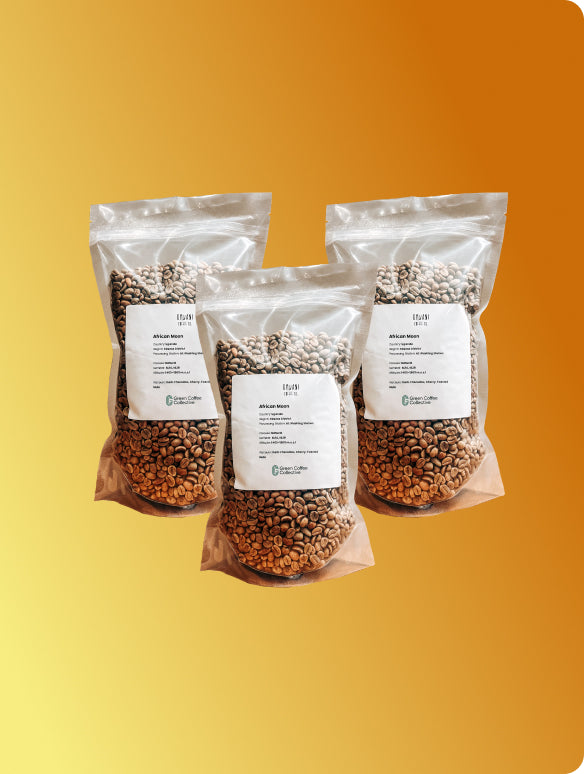
Ethiopia green coffee beans from the birthplace of coffee. Grown at high altitude, Ethiopian green coffee beans bring bright acidity, floral aromas and fruit-forward flavour. Browse the full green coffee range for every origin and process. See also kenya green coffee, rwanda green coffee beans and african green coffee beans. No customs, no duties, nothing extra to pay on delivery to Ireland. Order by 11am Mon-Fri for same-day dispatch.
Dale Goulding, Co-Founder, Green Coffee Collective
Why Ethiopian coffee tastes the way it does
Ethiopia is where Arabica comes from, and it still holds more coffee genetic diversity than anywhere else. Most farms grow a mix of local landraces and selections from the Jimma Agricultural Research Centre (JARC), such as 74110, 74112 and Kurume. That’s why Ethiopian lots are often listed as “heirloom”: a single farm can hold dozens of closely related plant types.
Altitude does the rest. In Sidama, Gedeo (Yirgacheffe) and Guji, coffee grows at around 1,900–2,300m, where cool nights slow cherry ripening and build the sugars and acids behind those floral, citrus and stone-fruit notes. The beans are small and dense as a result.
Processing sets the style. Washed Ethiopians tend to be clean and tea-like, with jasmine, bergamot and lemon. Naturals, dried in the whole cherry on raised beds, lean into strawberry, blueberry and tropical fruit, with more body.
How the cherry is handled after picking changes the cup more than almost anything else.
WashedCherry skin and mucilage removed before drying – clean, bright, origin-expressive cup.1 in stock →What is it?
NaturalWhole cherries dried with fruit intact – produces heavy body and fruit-forward flavour.0 in stockWhat is it?
The regions
Sidama1,700–2,350m
High kebeles like Bensa, Murago and Arbegona give us floral washed lots and intensely fruity naturals and anaerobics.
Yirgacheffe1,750–2,200m
Gedeo Zone highlands where smallholders grow heirloom coffee under shade. Washed lots are famously floral and tea-like, with jasmine, bergamot and citrus; naturals lean to blueberry.
Guji1,800–2,350m
Rugged, semi-forest highlands in southern Oromia. Renowned for extreme elevations and natural-processed coffees that feature intense tropical fruit, peach, and sweet floral flavor profiles.
Sidama rainfall: 2026 vs the 10-year average
202610-year average
Sidama has had 3% less rain than its 10-year average so far this year (1,622 mm against 1,676 mm, January to October). August to October were 20% below normal.
JanFebMarAprMayJunJulAugSepOctNovDec
Monthly rainfall in Sidama, Ethiopia,
2026 compared with the 2016–2025 average
Month
2026 (mm)
10-year average (mm)
January
12
36
February
5
49
March
452
122
April
253
341
May
193
263
June
37
138
July
179
114
August
68
155
September
172
189
October
250
268
November
not yet
143
December
not yet
47
Why it matters: rain at flowering sets up the next crop, and dry weather at harvest helps naturals dry evenly. Big swings either way can mean a smaller or later harvest – we'll say so here as reports come in.
Source:
NASA POWER (MERRA-2)
for Sidama
(6.55°N,
38.75°E)
· updated monthly · last updated 8 Nov 2026
Aragash Gelcha's farm is in Halo Shashemene village, within Halo Bariti kebele, part of the Gedeb district in the Gedio zone of Eastern Southern Ethiopia, a region known for producing some of the best coffees in Yirgacheffe. On her 5-hectare farm she grows coffee as a cash crop alongside enset (false banana) and fruit trees, to feed her 12 children (6 daughters and 6 sons).
In 2018, Ethiopia's coffee exporting rules were updated to allow smallholders to export their own coffee directly. Aragash was granted an export licence, but over the last seven years she has faced systemic and logistical barriers in reaching stable and fair coffee markets. She and her family continue to produce an average of 800 kg of green coffee per hectare, and in the off-season the whole family works together to apply best agronomic practices, keeping the farm healthy and sustainable.
From farm to our warehouse
Most Ethiopian coffee is grown by smallholders, often on less than a hectare, who sell their cherry to a local washing station. The station processes and dries it, and lots are graded and prepared for export in Addis Ababa. Smallholders produce about 90% of the country’s coffee.
We buy through Omwani, our East African import partner, which works directly with washing stations and producers rather than through the commodity exchange. That direct route lets us name the station, the producer and often the village on every lot.
Lots change every year. Each harvest is different, washing stations sell to different buyers, and we’d rather buy what’s cupping best that season than repeat a name for the sake of it. If you liked a past lot, join the arrivals list and we’ll tell you what’s closest when the new crop lands.
Fresh-crop Ethiopian lots arrive months after the harvest ends. Buy on arrival for the brightest cup.
JFMAMJJASOND
Harvest
Lands with us
Buying Ethiopian coffee in volume
From a first sample bag to a container, without the import paperwork.
0.5 – 5KGSample and small batchOpen to everyone. Most lots offer a sample size so you can cup before committing.Shop in-stock lots →
10 – 20KGWholesale accountApproved roasters see 10kg and 20kg sizes and trade pricing when signed in.Apply for wholesale →
FULL SACKS & CONTAINERSThrough our import partnersSacks, pallets and full containers from the importers we buy Ethiopian coffee from.OmwaniCoffee LegendsSheba
Roasting Ethiopian coffee
Ethiopian beans are small and dense, so they take heat quickly and can scorch if you charge too hot. Many roasters start gentler than they would with a Brazil and finish lighter, around first crack plus a short development, to keep the florals and acidity. Naturals and anaerobics colour faster than washed lots, so judge them by time and temperature as well as colour.
Never roasted coffee before?These are raw, unroasted beans – they need roasting before you can brew them. It's easier than it sounds.
Ethiopian coffee is known for floral, citrus and fruit-forward flavours that few other origins match. Washed lots tend to be light and tea-like, with jasmine, bergamot and lemon. Naturals are sweeter and heavier, with strawberry, blueberry and tropical fruit. The high altitude, the diversity of the plant varieties and the processing method all shape the cup.
What’s the difference between Yirgacheffe, Sidama and Guji coffee?
They’re neighbouring growing areas in southern Ethiopia, each with its own style. Yirgacheffe, in the Gedeo zone, is best known for delicate, floral washed coffees. Sidama is larger and more varied, producing everything from clean washed lots to intense naturals and anaerobics. Guji, to the south, is famous for vivid, fruit-heavy naturals. Yirgacheffe was historically part of the old Sidamo province, which is why older labels sometimes overlap.
Why is Ethiopian coffee labelled “heirloom”?
“Heirloom” means the lot is a mix of local Ethiopian coffee varieties, not one named cultivar. Ethiopia is where Arabica originated, and its farms grow thousands of wild-descended landraces alongside research selections such as 74110 and 74112. Many smallholders grow several types side by side, so a single lot rarely comes from one variety. Better-traced lots name the specific selection.
When is the best time to buy Ethiopian green coffee?
The best time is soon after the new crop arrives, which for Ethiopia means May - August. The harvest runs from October to January, then the coffee is dried, milled and shipped, so it lands months later. Fresh-crop lots have the brightest acidity and aromatics. Join the arrivals list on this page to hear when new lots land.
How do you roast Ethiopian green coffee beans?
Start gentler than you would with denser-bodied origins, and finish lighter to keep the florals. Ethiopian beans are small and dense, so they take heat quickly and can scorch at a high charge temperature. Most roasters stop shortly after first crack. Naturals and anaerobics colour faster than washed lots, so go by time and temperature, not colour alone.
Can I buy Ethiopian green coffee in small quantities?
Yes. Our Ethiopian lots come in 0.5kg, 1kg and 5kg bags, with no account needed. Wholesale customers can order 10kg and 20kg, and full sacks are available through our import partners. Small bags let home roasters and new roasteries try several lots before committing to volume.
Do you sell roasted Ethiopian coffee?
No, we only sell green (unroasted) coffee beans for roasting yourself. If you’re new to it, home roasting is easier than most people expect. A popcorn popper or a small roaster such as the Kaffelogic Nano 7 is enough to start, and our beginner’s guide covers the basics.