Glossary > Sustainability & Ethics > Regenerative Agriculture
Regenerative Agriculture
Sustainability & Ethics
In Simple Terms
Regenerative agriculture doesn't just try to minimise farming's damage - it aims to actively improve the land, building soil health, biodiversity, and resilience over time.
What is regenerative agriculture in coffee?
Regenerative agriculture is a farming philosophy that goes beyond sustainability - aiming not just to minimise harm but to actively restore and improve the ecological systems within and around a farm. In coffee, regenerative approaches typically emphasise soil health, biodiversity, water cycle restoration, carbon sequestration, and the reduction or elimination of synthetic inputs, while also attending to the social and economic resilience of farming communities.
The distinction from organic or sustainable farming is one of intent and outcome. Organic certification specifies what you can't do (no synthetic pesticides or fertilisers); sustainability frameworks aim to maintain current conditions; regenerative agriculture explicitly targets improvement - building soil organic matter, increasing biodiversity, sequestering carbon, and enhancing the farm's capacity to withstand climate variability over time.
In the specialty coffee world, regenerative agriculture has gained significant traction as climate change threatens the viability of current growing regions and practices. Initiatives like the Sustainable Coffee Challenge, Enveritas, and various producer-facing programmes are exploring how regenerative principles can be applied to coffee landscapes. For buyers, a regenerative claim on a lot specification is worth investigating: unlike organic or Fairtrade, there is currently no universal standard or certification for regenerative coffee, so the specific practices and verified outcomes matter more than the label.
Related Terms
Our subscribers know before anyone else about new content and tips.
Our subscribers know before anyone else about new content and tips
Related Articles You Might Find Interesting
-
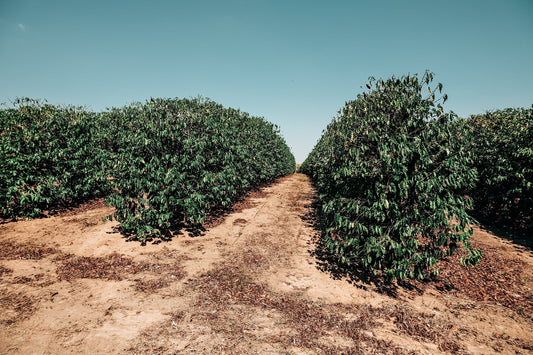
Monoculture vs intercropping – what’s in it for coffee farmers?
The way coffee is grown has a direct impact on the quality in the cup, the livelihoods of farmers, and...
Monoculture vs intercropping – what’s in it for coffee farmers?
The way coffee is grown has a direct impact on the quality in the cup, the livelihoods of farmers, and the long-term health of the land. For decades, large-scale monoculture...
-
A climate fix - or another burden on the Global South? The EUDR and smallholder coffee
The EU’s new deforestation regulation is ambitious - and overdue. It aims to stop products linked to forest loss from...
A climate fix - or another burden on the Global South? The EUDR and smallholder coffee
The EU’s new deforestation regulation is ambitious - and overdue. It aims to stop products linked to forest loss from entering the European market, including coffee. In theory, it’s a...
-
Climate migration and the future of coffee: how climate change is displacing coffee farmers
Climate change is no longer a distant threat for coffee producers. Across Central America, rising temperatures, erratic rainfall, and new...
Climate migration and the future of coffee: how climate change is displacing coffee farmers
Climate change is no longer a distant threat for coffee producers. Across Central America, rising temperatures, erratic rainfall, and new waves of pests are dismantling the foundations of one of...