Sourced by Indochina. Fulfilled by Green Coffee Collective.

Buy high-quality green coffee in small volumes, with fast delivery.

  • About Indochina

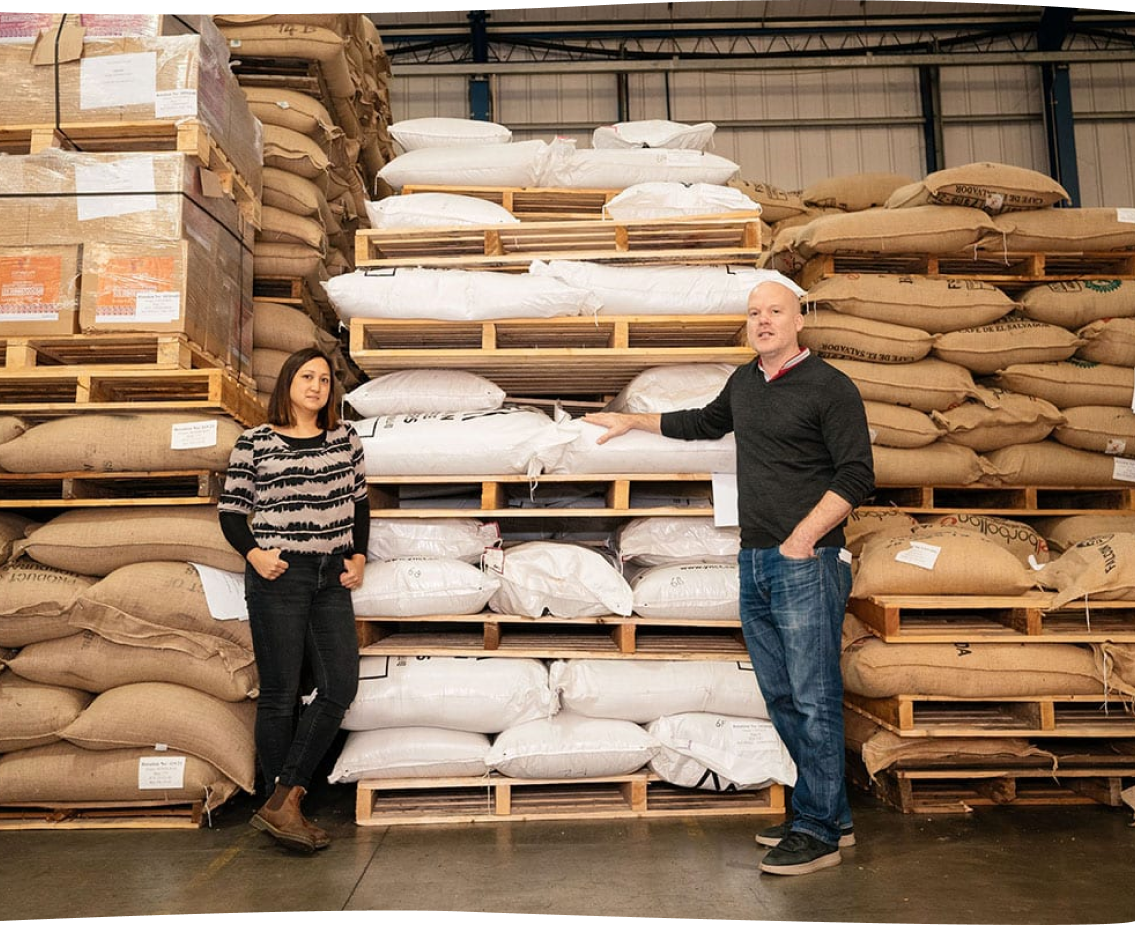
    Indochina Coffee was founded by Shirani Gunawardena and Christian Steenberg, a couple who first encountered the specialty coffee of Southeast Asia while living in Bangkok in 2015. What struck them was not just the quality of the coffee but the near-total absence of it in the UK market. When they returned to London, they set about changing that — sourcing their first lots from China and Myanmar in 2017, and building the business from there.

    The team is small and deliberate. Shirani is a licensed Q Grader and leads on quality assessment and the sensory side of the business. Christian manages customer relationships and logistics, ensuring coffees move accurately from origin to roastery. Aidan, who joined in 2023, brings a background as a specialty barista and Head Roaster, and works with roasters to understand how to get the best from Asian origins. Between them, they cover the full range of what it takes to source, move, and communicate exceptional coffee from one of the world's most overlooked producing regions.

    Indochina currently sources from China, Myanmar, Thailand, and the Philippines, with the same producer and export partners they have worked with since the beginning. Their goal is straightforward: to see specialty coffee from Asian origins treated not as an occasional curiosity but as a permanent and expected part of every serious roaster's sourcing calendar. The coffees available through GCC are a direct result of that mission.

  • Why Asia

    When Shirani and Christian returned to London from Bangkok, they were genuinely surprised by the absence of Asian specialty coffee in the UK market. Some of it was down to preconceptions about quality. A lot of it was simply lack of awareness — most roasters and coffee drinkers had never had the opportunity to try great coffee from these origins, and many didn't realise that countries like China, Myanmar, Thailand, or the Philippines grew coffee at all.

    That gap was the starting point for Indochina Coffee. Asia is a continent with deep, complex coffee histories: the Philippines was, for a brief period in the late nineteenth century, the only source of coffee in the world. Yunnan has been producing commercial coffee since the 1990s and is now producing specialty lots that stand up to comparisons with more established origins. These are not new origins — they are origins with histories that predate most roasters' awareness of them.

    Contrary to the assumption of a single 'Asian' coffee profile, the diversity across these origins is enormous. Terroir, climate, altitude, coffee subspecies, processing traditions, and the cultural and agricultural histories of each country all produce different results in the cup. Indochina's role is to make that diversity accessible and legible for roasters who are ready to engage with it seriously.

  • Trading Responsibly

    Indochina Coffee was built around a clear conviction: that almost all of the wealth derived from the coffee industry continues to bypass the indigenous communities who actually grow it. Responsibly traded specialty coffee has the potential to change this. It is not a passive belief — it is the principle that determines who they work with and how.

    Their approach to pricing reflects this directly. They do not negotiate in the way that commodity trading typically operates. They understand where the money goes at the other end of the supply chain, and their partnerships are mature and transparent enough for open, honest conversations about price every season. The farmers and producers they work with are not treated as interchangeable suppliers — they are partners who, in many cases, were just beginning to export at the same time Indochina was getting started. The relationships have grown together.

    This matters particularly given the geopolitical complexity of the regions they operate in. They work with farmers in parts of Myanmar that have long been in conflict with the government, with hilltribe communities in Yunnan, and with producers in northern Thailand whose communities shifted from opium to coffee cultivation as part of alternative development programmes backed by the Thai government and international organisations. Supporting these communities through consistent, fair, long-term sourcing is, in their view, the most meaningful contribution an importer can make.

  • Long-Term Partnerships

    Indochina has worked with the same producer and export partners since their first coffees landed in the UK in 2017. When a producer knows they have a reliable buyer who will return each harvest, they can invest in quality. When an importer knows a farm well, they can communicate what works and what doesn't in a way that genuinely influences the next season's processing decisions.

    Both Shirani and Christian spend significant time at origin during harvest — visiting farms, spending time with producers, and understanding the context in which their partners are operating. That time is not incidental to the business. It is how the business works. The knowledge they bring back from those visits is what allows them to speak with authority about every coffee in their range, and what allows GCC to offer that same depth of information to roasters buying through the platform.

    When new origins have been added — the Philippines most recently — it has followed the same pattern: building relationships first, understanding the landscape, and only bringing coffee to market when the partnership and the quality are both ready. As Aidan has joined the team, the same approach extends to how they work with roasters: understanding the roastery, the profile, and what a coffee needs to do before recommending a lot.

  • The Origins

    China

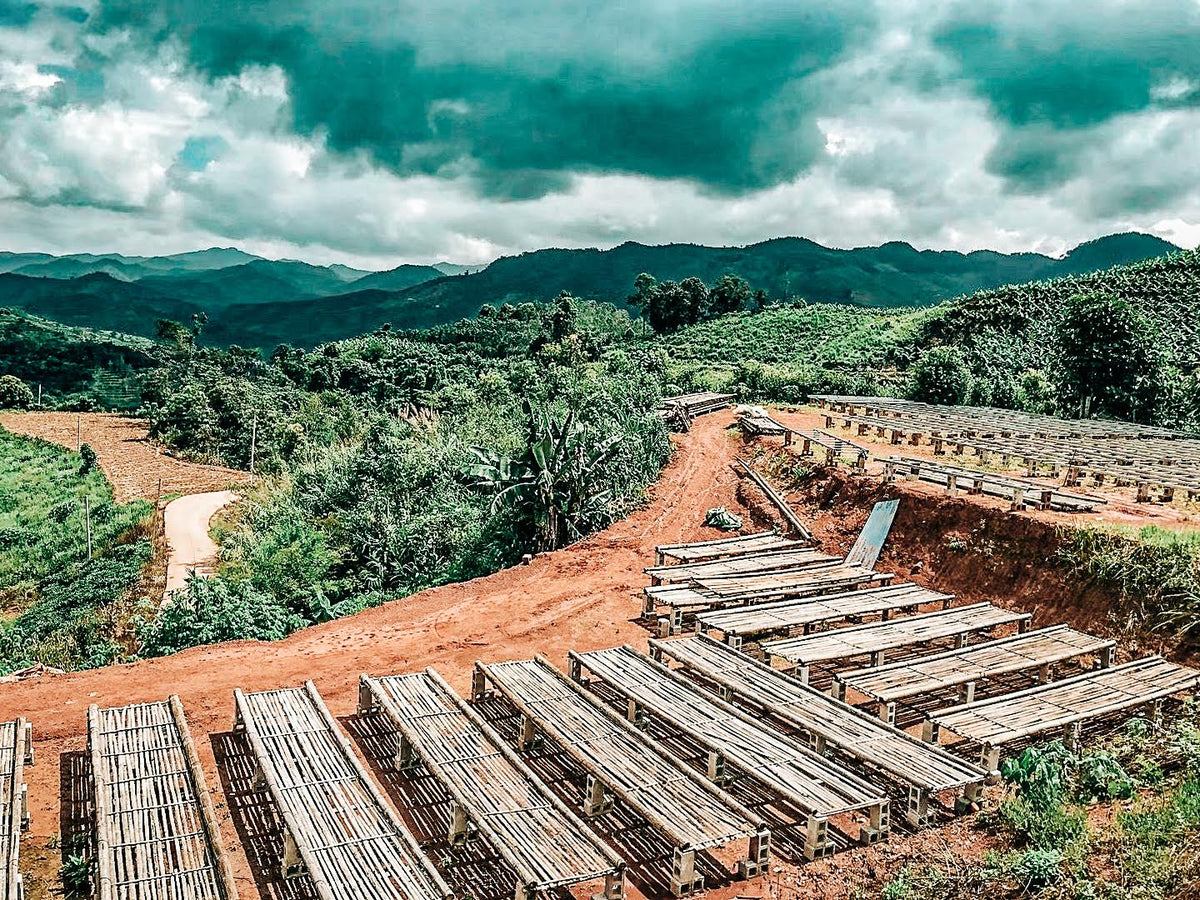
    Yunnan is where Indochina's importing business first took commercial shape — their earliest lots from China landed in the UK in 2017, alongside their first Myanmar coffees. Commercial coffee has been grown here since the 1990s, but specialty production is a more recent development, driven by forward-thinking farmers improving their processing and introducing varieties including Typica, Bourbon, Pacamara, and Geisha alongside the mature Catimor plantations already in place. Indochina works closely with Yunnan Coffee Traders, and the coffees that come from this partnership have consistently surprised roasters who approach Chinese coffee with scepticism and leave as converts.

    Myanmar

    Myanmar's Shan State sits in the same hill tribe network as northern Thailand and Yunnan, sharing many of the same indigenous communities, languages, and agricultural traditions. Indochina works with Mandalay Coffee Group and has maintained these relationships since their first exports in 2017 — through significant political and logistical disruption. The consistency of that commitment is reflected in the quality and traceability of what they bring to market.

    Thailand

    Thailand is where it all began for Indochina — they spent time living in the country, stayed with coffee-growing hill tribes in the far north, and built close relationships with producers over several years before their first Thai lots landed in the UK.

    Coffee has been grown commercially in Thailand since the early 1960s, but it was the late King Bhumibol Adulyadej who drove its expansion in the late 1970s, championing Arabica as an alternative crop to opium in the northern highlands. The policy has been remarkably effective — opium production in the region fell by more than 80% between 1998 and 2006. More recently, shade-grown coffee has become part of the fight against deforestation, with farmers planting native trees alongside coffee plants to improve both the environment and the quality of the cup.

    The Arabica-growing regions are concentrated in the northern provinces of Chiang Mai and Chiang Rai, where the growing conditions are well suited to quality production: altitudes of 1,200 to 1,600 metres, volcanic soil, fresh spring water, and the right balance of temperature and rainfall. The farming communities here are predominantly hill tribes — Akha, Karen, Lahu, Hmong, and others — who share cultural and ethnic ties with communities across the borders into Myanmar, Laos, and China. Indochina works with Sirinya Coffee, a family-run farm and roastery in Chiang Rai that has been growing coffee for over 40 years.

    Indochina is committed to ensuring that the quality and consistency of Thai coffee is high enough to represent the best of the country to UK and European roasters, and that the farmers they work with receive a genuine stake in what they are trying to achieve — including involvement in reforestation and other social initiatives.

How we package
our coffees

Barrier packaging designed for specialty coffee.

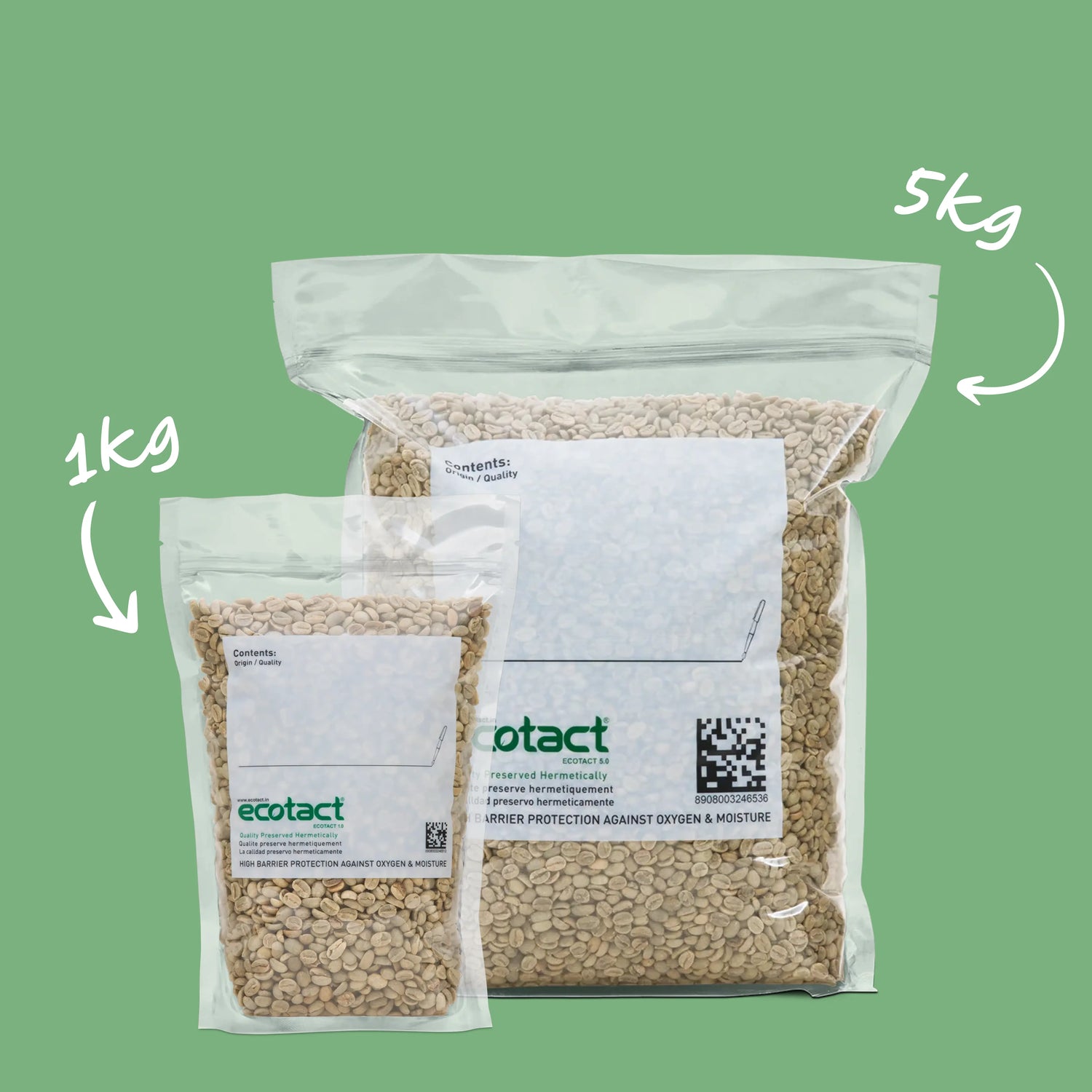
We use Ecotact bags because they offer high-barrier protection against oxygen, moisture, and external contaminants. This helps preserve the quality, aroma, and flavour potential of your green coffee during transport and storage. They're trusted by top producers and importers worldwide.

Heat-Sealed for Maximum Protection

Every bag is professionally heat sealed at our warehouse to lock in freshness. This creates a secure seal that prevents exposure to air or humidity - keeping your green coffee stable, even over long periods.

Convenient Resealable Zip Closures

Once opened, each bag has a resealable zip to help you store and protect the rest of your coffee between roasts. It’s a simple way to reduce waste and maintain freshness - especially helpful for home roasters or sampling.

Portion sizes for any roaster.

Whether you're roasting at home or running a production line, we've got a size to suit. Choose from 0.5kg, 1kg, or 5kg bags - all packed with the same level of care. Smaller volumes make it easy to try new coffees without the commitment.

Responsible packaging choices.

Our bags are made from Graded 7 multi-layer recyclable plastic. While they may not go in your home recycling bin, they are accepted by specialist facilities. More importantly, they reduce waste by dramatically extending the shelf life of your green coffee.
Your questions, answered

Who are Indochina Coffee?

Indochina Coffee is an independent, family-run green coffee importer based in London, founded by Shirani Gunawardena and Christian Steenberg. They specialise exclusively in specialty coffee from across Asia — currently sourcing from China, Myanmar, Thailand, and the Philippines — and have been importing to the UK since 2017.

What countries does Indochina source from?

Currently China (Yunnan province), Myanmar (Shan State), Thailand (Chiang Mai and Chiang Rai provinces), and the Philippines. The range evolves as new producer partnerships are established, and the specific lots available change each harvest.

How does Indochina approach pricing and producer relationships?

They don't negotiate in the conventional commodity sense. Their partnerships are long-term, transparent, and built on mutual respect — most of the producers they work with were just beginning to export at the same time Indochina was getting started, and the relationships have developed together. The priority is always that the producers they work with can use the income generated to improve quality of life for their communities and invest in their farms over time.

Why does Indochina work in such geopolitically complex regions?

Because that is where many of the most interesting and important coffees in Asia come from, and because withdrawing support from farming communities in difficult circumstances would not improve those circumstances. Indochina is transparent about the complexity of the regions they work in and believes that responsible, consistent sourcing is a more meaningful contribution than avoidance.

Can I get larger volumes than what's listed on GCC?

GCC offers Indochina lots in smaller quantities suited to roasters who want access without large-volume commitments. For higher volumes or a more direct relationship, you can reach Indochina through their website at indochinacoffee.com.

How long has Indochina been working with GCC?

Indochina has been part of the Green Coffee Collective since its early days, drawn by a shared commitment to making specialty green coffee accessible to roasters of all sizes — including those just starting out who can't commit to full-bag import volumes.