Glossary > Sustainability & Ethics > Shade Tree
Shade Tree
Sustainability & Ethics
In Simple Terms
Shade trees are planted over coffee plants to moderate the growing environment. They slow cherry development and improve soil health - a key part of traditional agroforestry coffee farming.
What is a shade tree in coffee farming?
A shade tree is any tree grown alongside coffee plants to provide overhead canopy cover, moderating the growing environment. Shade trees are a defining feature of traditional coffee agroforestry systems and are central to shade-grown and Bird Friendly farming approaches.
The practical effects of shade on coffee are significant. A canopy of shade trees moderates temperature extremes - keeping the microclimate beneath cooler and more stable than full-sun exposure. This slows cherry maturation, allowing more time for sugar and acid development in the bean. Shade also reduces water stress on coffee plants during dry periods, maintains soil moisture through leaf litter, and in the case of leguminous trees, fixes nitrogen into the soil.
Common shade tree species used in coffee farming vary by origin. Erythrina species (known as poró in Central America and Mexico), Grevillea, banana and plantain, citrus trees, and timber species like cedar are widely used. Each brings different canopy characteristics, root competition levels, and additional value - timber, fruit, or nitrogen fixation. The choice of shade species and the density of the canopy both affect how much light reaches the coffee and therefore how the plant grows and when cherry matures. Full shade and deep shade produce different growing conditions to dappled or partial shade, making shade management one of the subtler variables in farm-level quality control.
Related Terms
Our subscribers know before anyone else about new content and tips.
Our subscribers know before anyone else about new content and tips
Related Articles You Might Find Interesting
-
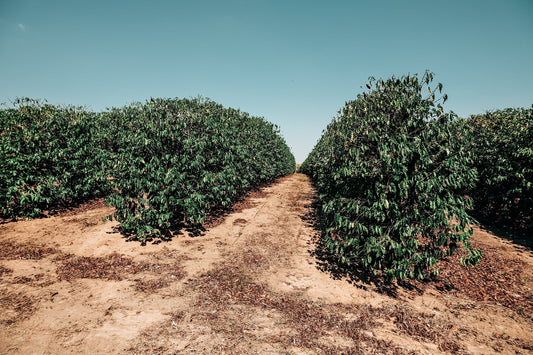
Monoculture vs intercropping – what’s in it for coffee farmers?
The way coffee is grown has a direct impact on the quality in the cup, the livelihoods of farmers, and...
Monoculture vs intercropping – what’s in it for coffee farmers?
The way coffee is grown has a direct impact on the quality in the cup, the livelihoods of farmers, and the long-term health of the land. For decades, large-scale monoculture...
-
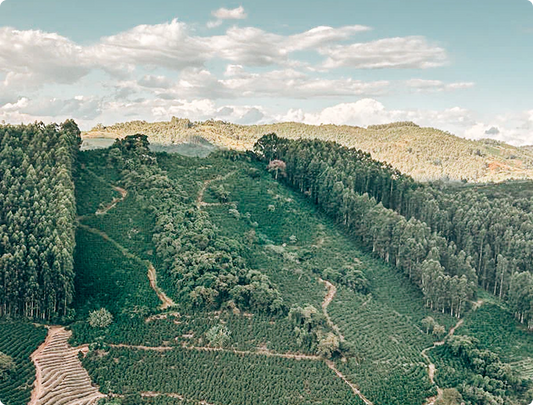
A climate fix - or another burden on the Global South? The EUDR and smallholder coffee
The EU’s new deforestation regulation is ambitious - and overdue. It aims to stop products linked to forest loss from...
A climate fix - or another burden on the Global South? The EUDR and smallholder coffee
The EU’s new deforestation regulation is ambitious - and overdue. It aims to stop products linked to forest loss from entering the European market, including coffee. In theory, it’s a...
-
A Coffee Roaster's Guide to Sustainable Coffee Roasting
Coffee roasting plays a crucial role in the coffee industry's overall carbon footprint, impacting both the environment and business costs....
A Coffee Roaster's Guide to Sustainable Coffee Roasting
Coffee roasting plays a crucial role in the coffee industry's overall carbon footprint, impacting both the environment and business costs. "A Coffee Roaster's Guide to Sustainable Coffee Roasting" explores how...