What Is Natural Process Coffee? A Clear Guide to Natural Coffee Processing

Table of Contents
If you’ve been looking through green coffee listings, you’ve probably come across the term natural process coffee. It often appears alongside washed and honey lots, usually described as fruit-forward, sweet, or bold.
Natural process coffee is coffee that has been dried with the whole cherry intact before the fruit is removed. That single choice - drying the seed inside the fruit rather than washing it clean first - has a noticeable impact on sweetness, body, and flavour development.
For anyone learning how to buy green coffee, understanding natural coffee processing gives you a clearer sense of what you are choosing and why. It helps you move beyond flavour descriptors and look at what is happening at origin.
If you’re new to processing altogether, this article builds on our wider Green Coffee Basics guide, where we explain how to buy green coffee beans confidently and interpret listings properly.
What Is Natural Processed Coffee?
Natural process coffee, also known as dry process, is a method where the coffee cherry is dried whole - with the skin and fruit intact - before the seed is removed. This allows the bean to absorb sugars and organic compounds from the surrounding fruit, resulting in a profile typically defined by high sweetness and heavy body.
In practical terms, that means the freshly harvested cherries are laid out to dry - often on raised beds or patios - with the skin, pulp, and mucilage still surrounding the seed. As the cherries dry, sugars and fruit compounds influence the bean inside.
Once drying is complete and the moisture content is stable, the dried fruit is removed mechanically to reveal the green coffee bean.
Compared to washed processing, where the fruit is removed before drying, natural process coffee keeps the seed in contact with fruit for much longer. That extended contact is what shapes flavour.
How Natural Coffee Processing Works
To understand natural coffee processing, it helps to picture the structure of a coffee cherry.

From the outside in, you have:
-
Outer Skin
-
Pulp
-
Mucilage
-
Parchment
-
Silver skin
-
Seed (the green coffee bean)
In washed processing, most of the fruit layers are removed quickly after harvest. In natural processing, they remain in place during drying.
The drying stage is critical. Cherries must be turned regularly to prevent mold and ensure even moisture loss. Climate plays a significant role here. Natural processing works best in regions with dry, stable conditions which is why Ethiopia and Brazil are well-known examples.
Because the fruit remains intact, drying takes longer and requires close attention. Done well, it produces clarity and sweetness but done poorly, it can introduce unwanted fermentation or instability.
Natural coffee processing is simple in theory, but it depends heavily on careful management.
Natural Processed Coffee Flavour
Natural process coffee is often associated with fruit-forward flavours and a heavier body.
Because the seed dries inside the cherry, sugars and fruit compounds influence how flavour develops during roasting. Many natural coffees show notes of berries, tropical fruit, or jam-like sweetness. The body can feel fuller, and acidity often appears softer compared to washed coffees.
That said, natural process coffee flavour varies widely. A well-managed natural from Ethiopia will taste very different from a commercial-grade natural from elsewhere. Origin, altitude, varietal, and drying conditions still matter.
When comparing washed vs natural coffee, washed lots tend to emphasise clarity and acidity, while natural lots tend to emphasise sweetness and body.

Washed, Honey, and Natural: A Simple Comparison
|
Processing Method |
Fruit Contact During Drying |
Typical Flavour Direction |
Risk Level |
|
Washed |
Minimal |
Clean, bright, structured |
Lower |
|
Honey |
Partial |
Sweet, balanced, rounded |
Moderate |
|
Natural |
Full cherry intact |
Fruit-forward, heavier |
Higher |
This table simplifies reality, but it gives a useful starting point when learning how to buy green coffee.
Trade-Offs: What Natural Process Coffee Does Well - and Where It Can Go Wrong
Natural process coffee can be expressive and distinctive, but it comes with trade-offs.
Because the whole cherry dries intact, there is greater risk of uneven fermentation or mold if drying conditions are poor. Inconsistent turning or unstable weather can affect quality. That variability is part of why natural coffees can feel exciting - but it is also why they can sometimes feel unpredictable.
Well-managed naturals are clean and structured despite their fruit character. Poorly managed naturals can taste flat, overly fermented, or unstable.
If you prefer extremely crisp acidity and clear structure, washed coffee may suit you better. If you enjoy pronounced fruit sweetness and fuller texture, natural process coffee may align more closely with your preferences.
Understanding that balance helps you buy more deliberately rather than relying solely on flavour notes.
Common Mistakes When Buying Natural Process Coffee
One common mistake is assuming that all natural coffees are intensely fruity. Some are subtle and balanced, especially when drying is controlled carefully.
Another is focusing only on processing without considering harvest freshness. Natural coffees can lose vibrancy over time, particularly if storage conditions are unstable. Understanding how long green coffee lasts and how to store green coffee properly becomes important here.
It’s also easy to treat “natural” as a flavour guarantee rather than a processing method. Processing influences flavour, but it does not override varietal, terroir, or agricultural quality.
What To Consider When Roasting A Natural Coffee
For a roaster, natural process coffee is both an opportunity and a challenge. Because the seed has been in contact with fruit sugars for weeks, the chemical composition of the green bean is fundamentally different from a washed coffee.
When you are buying natural green coffee, keep these three factors in mind:
-
Higher Sugar Content & Maillard Reaction: The increased presence of simple sugars means natural coffees tend to caramelise faster. If you are roasting at home, you’ll notice that naturals often show colour change earlier in the roast. You’ll need to manage your heat carefully to avoid "tipping" or scorching the beans.
-
The "Quaker" Risk: A common issue with lower-grade naturals is the presence of under-ripe cherries that were harvested alongside ripe ones. Since they are all dried in the skin, they are hard to spot until they are roasted - where they appear as pale, peanut-smelling "quakers." High-quality, specialty-grade naturals undergo more-rigorous colour sorting to try to eliminate this.
-
Moisture and Density Stability: Natural coffees can sometimes be less "stable" than washed coffees. We pay closer attention to Water Activity levels. A natural coffee with high water activity may lose its vibrant "blueberry" or "strawberry" notes faster than a washed coffee.
Sourcing Tip: When inspecting your green coffee, look for a consistent, deep green or slightly yellowish hue. If the beans look mottled or have significant silver-skin (chaff) still attached, it’s a sign of a "heavy" natural process that will produce a very fermented, funky cup.
When Should You Choose Natural Process Coffee?
If you are learning how to buy green coffee and want something expressive, natural process coffee can be a good place to explore.
Naturals often perform well as filter coffees where fruit character can shine. They can also work in espresso, though clarity may differ from washed options.
If you are just starting out with green coffee, choosing a well-described natural from a reliable supplier reduces risk. Look for clear information about origin, drying method, and physical measurements such as moisture and density.
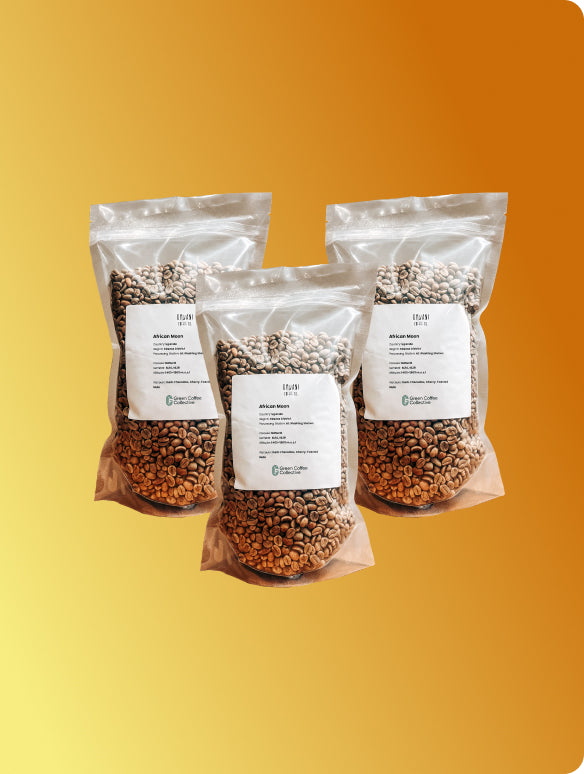
We offer natural process coffee in quantities from 0.5kg to 30kg, allowing home and small-scale roasters to experiment without committing to full commercial sacks.
For broader context on buying decisions, see our guide on how to buy green coffee beans confidently.
Final Thoughts
Natural process coffee is one of the oldest coffee processing methods. It relies on drying the seed inside the fruit, allowing sugars and compounds to influence flavour more directly.
It can produce expressive, fruit-forward profiles, but it requires careful drying and management. Understanding how natural coffee processing works helps you interpret listings more clearly and choose based on preference rather than guesswork.
Processing is not the only factor that matters when buying green coffee, but it is one of the clearest indicators of what you can expect in the cup.
Vanliga frågor
What is natural processed coffee?
What are the four types of coffee processing?
Is naturally processed coffee stronger?
Is naturally processed coffee more sustainable?
Relaterade artiklar som du kanske tycker är intressanta
-
 12 min readGreen Coffee Basics
How to Buy Green Coffee Beans & Choose the Right Supplier
Green coffee beans sit at the foundation of every roast. Long before flavour develops in the drum, a coffee’s character...
How to Buy Green Coffee Beans & Choose the Right Supplier
Green coffee beans sit at the foundation of every roast. Long before flavour develops in the drum, a coffee’s character is shaped by how it was grown, processed, prepared, graded,...


Dale Goulding
Co-Founder, Green Coffee Collective